
Bundelkhandi Food: Dishes to Try in Jhansi
Quick answer
Try bara (urad dal dumplings in buttermilk), thopa, baffori, maheri, karar and fara for everyday Bundelkhandi cooking, and ras kheer, lapsi, anarsa and puri ke laddoo for sweets. Most dishes use gram flour, dals, wheat and buttermilk, and are easiest to taste in local homes or added to a function menu.
Ask anyone who grew up in Jhansi what they miss about home food and you will rarely hear about restaurant curries. You will hear about bara soaked in buttermilk, thick pieces of thopa cut into diamonds on a steel thali, and a bowl of maheri on a winter night. Bundelkhandi food is everyday cooking from a dry, hard-working region, and much of it is made at home rather than sold in shops.
That is exactly why visitors miss it. If you are in Jhansi for a wedding, a work trip or a weekend at the fort and Orchha, this guide tells you which dishes belong to the region, what goes into them, how they are eaten, and how to bring a few of them to the table at a family function.
What makes Bundelkhandi food different?
Bundelkhand is the plateau region that spreads across southern Uttar Pradesh and northern Madhya Pradesh, with Jhansi often called its gateway. Wikipedia describes it as a mainly dry area where wheat and pulses are grown and where water problems have always been part of life. You can taste that history in the food. The kitchen leans on a short list of dependable ingredients and turns them into many different dishes.
- Besan (gram flour) and dals. Chickpea flour shows up again and again: steamed, fried, set into slabs, rolled into balls or cooked into gravies. Split black gram (urad) and split green gram (moong) are the other workhorses.
- Buttermilk. Chhachh is used as a soaking liquid, a cooking base and a cooling side. Several classic dishes are simply something made of dal or flour, finished in buttermilk.
- Wheat in many forms. Whole wheat rotis, broken wheat (dalia) and boiled wheat dough shapes are all common.
- Clay pots and wood fire. India’s official tourism site notes that Bundelkhandi cooking uses clay pots extensively, and that cooking over firewood gives the food a distinctly smoky flavour.
- Mahua. The flowers of the mahua tree are edible and, as Wikipedia notes, rich in sugars. In Bundelkhand they sweeten at least one well known dessert without any added sugar.
The result is food that is filling, inexpensive and very good at using what the season gives you. Most of it is vegetarian, though the royal kitchens of the region also had a meat tradition, which we cover below.
Which savoury Bundelkhandi dishes should you try?
The Madhya Pradesh Tourism Board lists a long set of traditional Bundelkhandi dishes. These are the ones you are most likely to hear about in Jhansi homes, with what goes into each.
Bara
Dumplings made from split black gram (urad dal), soaked in buttermilk and finished with a tempering of mustard seeds and a little crushed sugar. Think of it as the region’s cousin of dahi vada, lighter and tangier because of the chhachh.
Thopa
A gram flour mixture with salt, red chilli, garlic, onion and cumin is cooked until thick, spread on a thali, left to cool and cut into diamond shapes. It is eaten as it is, or dropped into buttermilk and served with rotis. Many families make a tray in the morning and snack on it through the day.
Baffori
Small gram flour pakoris that are steamed over a pot of water instead of fried, then spiced. Because they are steamed, they are soft and light, and they go with rotis or rice.
Meeda
Small pieces of gram flour dough, fried or roasted, simmered in a thin tomato and onion gravy. It is a good example of how one ingredient becomes a completely different dish depending on the cooking method.
Maheri
Broken wheat slow-cooked in buttermilk until soft, with a mild, khichdi-like texture. It is comfort food, easy on the stomach and very satisfying in the cold months.
Karar
Split green gram is soaked, peeled, ground coarsely and cooked in the style of kadhi with ginger, garlic and red chilli. It is served with rice.
Fara
Wheat flour dough rolled into small cylinders, boiled and then seasoned with cumin and red chilli. Fara is best eaten hot, straight from the pan.
Besan ke aaloo
Despite the name, there is no potato in this dish. Dried amla is ground and mixed with chickpea flour, shaped into balls, boiled and then roasted in ghee with spices. The amla gives a sharp, pleasant sourness.
Kunde ka bhatta
India’s official tourism site describes this as a traditional tribal dish of the region and a spicier version of baingan ka bharta, the smoky mashed brinjal that most North Indian families know well.
Rice with black sesame
Rice cooked with black sesame seeds is another local dish. The same source notes that kodu and kudki are the two rice varieties most widely used in the region. Both are small grains suited to dry farming.
Are there meat dishes in Bundeli cuisine?
Yes. Alongside the everyday vegetarian food, Bundelkhand has a court and hunting tradition that survives in a handful of dishes.
- Mutton with boiled chickpeas. A speciality of Bundeli royal kitchens, slow-cooked with spices and at its best in a clay pot. According to India’s official tourism site, it draws on the cooking of the indigenous communities of the area around Orchha, Jhansi and Datia, and was originally made with hunted meat and pounded spices.
- Bundelkhandi kebabs. Said to have come from the royal kitchens of the Bundela rulers, these are usually served with rice or makai (maize) rotis. Vegetable skewers are the vegetarian counterpart.
- Bundeli gosht. A meat curry with rich, aromatic spices, listed by MP Tourism among the region’s traditional dishes.
- Keeme ki tikki. Patties of minced lamb mixed with gram lentils.
If you are visiting Orchha, the old Bundela capital on the Betwa, you will find the royal side of this food easier to imagine. Our Orchha day trip guide from Jhansi covers the palaces whose kitchens these dishes are linked to.
What are the traditional Bundelkhandi sweets?
Sweets in the region are made from the same pantry: milk, wheat, gram flour, jaggery, ghee and, in one famous case, mahua flowers.
| Sweet | Main ingredients | When it is usually made |
|---|---|---|
| Ras kheer (raas ki kheer) | Milk with mahua flowers and sugarcane juice or millet; no added sugar | Enjoyed during the sugarcane harvest |
| Lapsi | Broken wheat (dalia), ghee, dried fruits | Any time; a wholesome home sweet |
| Anarsa | Rice flour with jaggery or sugar, deep fried | Usually prepared for Diwali |
| Puri ke laddoo | Fried gram flour rotis, crushed and roasted in ghee, sweetened with sugar or jaggery | Festivals and when guests visit |
Ras kheer is the one most people remember. The two official descriptions differ slightly: India’s tourism site describes mahua extract mixed with milk and millet, while MP Tourism describes milk with sugarcane juice and mahua. Both agree on the key point, which is that the sweetness comes naturally from the mahua and no sugar is added. Recipes vary from village to village, so treat both as correct.
How is a Bundelkhandi meal eaten?
A home meal in Jhansi is usually built around wheat rotis or rice, a dal or kadhi-style dish, one or two dry preparations and something sour or cooling on the side. A simple pattern looks like this:
- Base: wheat or maize rotis, or plain rice.
- Something wet: karar, meeda or thopa in buttermilk.
- Something dry: baffori, fara or besan ke aaloo.
- Cooling side: plain chhachh, or bara in buttermilk.
- Sweet to finish: lapsi in daily life, laddoos or anarsa when there is an occasion.
Breakfast and snacks tend to be the gram flour dishes. Heavier dishes such as maheri are favoured in winter, while buttermilk-based dishes are welcome in the hot months, when Wikipedia records Jhansi’s average summer temperature at 42.4°C.
Where can you taste Bundelkhandi food in Jhansi?
Honest answer: the best place is a local home, and the second best is a family function where the hosts have asked for regional dishes. Restaurants in most Indian cities, Jhansi included, tend to serve familiar North Indian, Chinese and continental menus, and regional home dishes come and go depending on the cook.
A few practical ways to find them:
- Ask at your hotel or host family. Staff who grew up in the area will know who in town makes bara or thopa on a given day.
- Look out during festivals. Anarsa and laddoos are easiest to find around Diwali.
- Ask for it at a function. If you are organising a wedding, sagai or birthday, a caterer can often add one or two regional dishes to the menu if you ask early.
- Visit in season. Some dishes depend on the harvest, such as ras kheer during the sugarcane season.
How can you add Bundeli dishes to a wedding or party menu?
A regional counter is one of the easiest ways to make a function in Jhansi feel personal, especially when relatives are coming from outside Bundelkhand. Keep these points in mind.
| Dish | Works best as | Tip for functions |
|---|---|---|
| Bara in buttermilk | Starter or chaat-style side | Serve chilled in small bowls; good for daytime events like haldi |
| Thopa | Snack platter | Easy to make ahead and cut neatly; holds well on a buffet |
| Baffori | Starter | Steamed, so lighter than pakoras for guests watching oil |
| Karar with rice | Main course | Pair with plain rice on the main buffet |
| Maheri | Winter main or late-night bowl | Good for cold evenings on the lawn |
| Lapsi or puri ke laddoo | Dessert | Place beside familiar sweets so guests can try a little of both |
Some practical advice from our side of the kitchen pass:
- Pick two or three dishes, not ten. A small, well made regional section stands out more than a long list.
- Label them. A small card with the name and one line on what it is helps guests from other states try new food.
- Taste first. Ask your caterer for a trial of any dish you have not had from them before, since home recipes vary a lot.
- Balance the menu. Many Bundeli dishes are gram flour based. Mix them with paneer, vegetables and rice dishes so the meal does not feel heavy.
For a wider view of planning food for a big event, see our guides to wedding menu ideas and planning a vegetarian wedding menu.
How does Hotel J P Farm fit in?
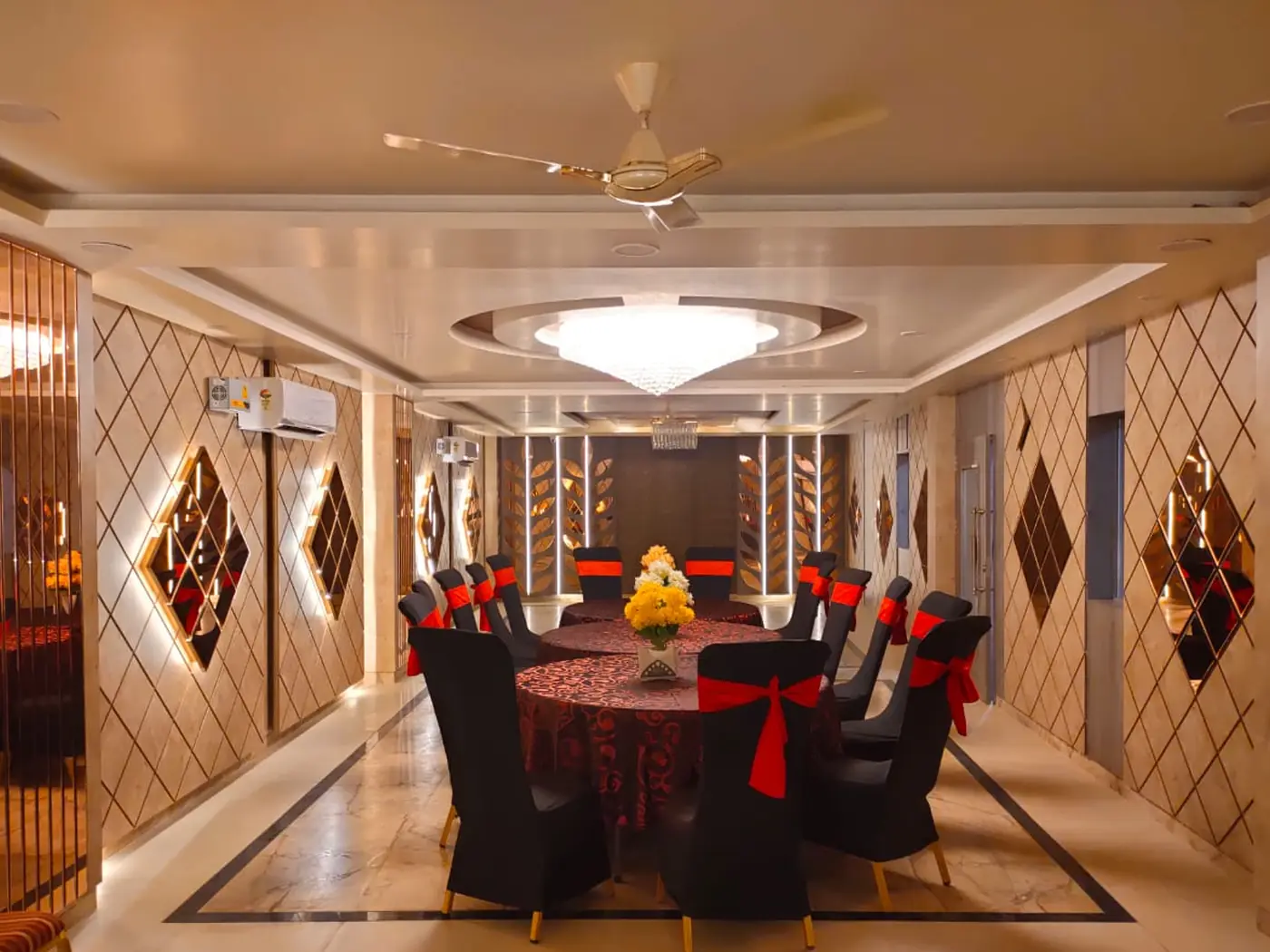
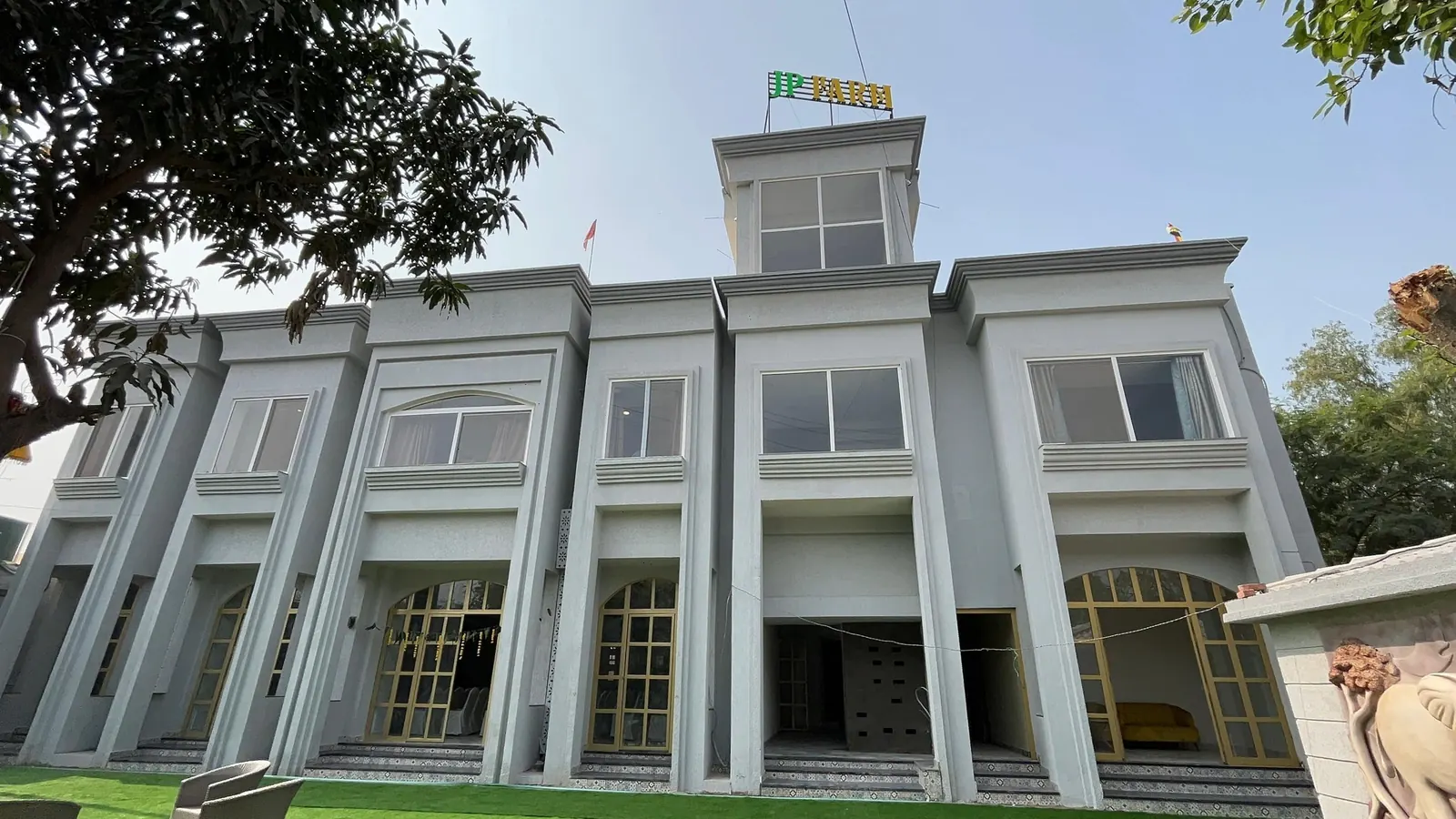
Hotel J P Farm is on Gwalior Road in Jhansi, with an in-house multi-cuisine restaurant, room service for staying guests, and catering for functions held at our venue: weddings, receptions, sagai, haldi, mehendi, birthdays, kitty parties and corporate meets across our two banquet halls and two garden lawns.
If you would like a regional dish or two on your function menu, call or WhatsApp us on 9935677964 or 7525934333 and we will talk you through what our kitchen can prepare for your date. You can see the dining space on our restaurant page and the function spaces on our banquet hall and lawns page.
“Wonderful hotel. Tasty food. And room is very spacious”
Suman Garg, Google review
Frequently asked questions
What is the most famous Bundelkhandi dish?
There is no single official dish, but bara (urad dal dumplings in buttermilk), thopa (set gram flour cut into diamonds) and ras kheer (a milk sweet sweetened with mahua) are among the best known. Each is simple to make and very typical of home cooking in the region.
Is Bundelkhandi food mostly vegetarian?
Everyday home food is largely vegetarian and built on gram flour, dals, wheat and buttermilk. The royal kitchens of the region did have meat dishes, such as mutton cooked with chickpeas, Bundeli gosht and kebabs served with maize rotis.
Is Bundelkhandi food very spicy?
Most of it is moderately spiced and often tangy because of buttermilk or amla. A few dishes, such as kunde ka bhatta, are noticeably hotter. If you are unsure, ask for it mild.
What is ras kheer made of?
Ras kheer is a milk sweet sweetened naturally by mahua flowers, with no sugar added. Official descriptions mention either millet or sugarcane juice as the other key ingredient, and recipes vary from village to village.
When is the best season to try regional food in Jhansi?
Winter is a good time because warming dishes such as maheri are popular and the weather suits long meals. Festival weeks such as Diwali bring out sweets like anarsa and laddoos. Some dishes are tied to harvests, so availability changes through the year.
Can we add Bundeli dishes to our function menu at Hotel J P Farm?
Call or WhatsApp us on 9935677964 or 7525934333 with your date, guest count and the dishes you have in mind. Our team will tell you what the kitchen can prepare and suggest how to fit it into the rest of your menu.
Sources: Incredible India, Orchha food and cuisine; Madhya Pradesh Tourism, Bundelkhand cuisine; Wikipedia, Bundelkhand; Wikipedia, Madhuca longifolia (mahua); Wikipedia, Jhansi.
We run 15 rooms, 2 banquet halls, 2 garden lawns and a restaurant on Gwalior Road, Jhansi, and host weddings and parties every season. These guides come from what our guests ask us most.
Keep reading
Food & Catering
How Per-Plate Catering Pricing Works for Weddings and Parties
Food & Catering