
How Per-Plate Catering Pricing Works for Weddings and Parties

Quick answer
Your food bill is the per-plate rate multiplied by the plates charged, plus add-ons and tax. You pay for at least the guaranteed minimum even if fewer guests come, and extra plates are charged on top. Compare quotes by dishes, inclusions, guarantee, child policy and whether GST is included.
Food is usually the single largest line in the budget for a wedding, reception or big family party. In most of India, including Jhansi and the rest of Bundelkhand, caterers and venues price it the same way: a fixed rate per plate, multiplied by the number of guests. It sounds simple, and that simplicity is exactly why so many families get surprised by the final bill.
Two quotes with similar per-plate rates can end up very different once you count the guaranteed minimum, extra counters, service charges and tax. This guide explains how per-plate pricing actually works, what is normally inside a plate and what is not, how to compare quotes line by line, and the questions to settle in writing before you pay an advance.
What does “per plate” actually mean?
A per-plate rate is the price for one guest’s full meal at your function, based on an agreed menu. It is not the price of a single plate of food. One “plate” usually covers everything that guest can eat across the event: welcome drinks, snacks, the main buffet and dessert, with unlimited servings within the agreed menu.
The total food bill is then worked out as:
Per-plate rate × number of plates charged + add-ons + applicable taxes
The tricky part is the “number of plates charged”. It is not always the number of people who turned up, as you will see below.
What is usually included in a per-plate rate?
Every caterer packages things differently, but a typical wedding or party menu quoted per plate includes some or all of these:
- Welcome drinks: one or two options such as a mocktail, juice, soup or shikanji.
- Starters: a fixed number of passed snacks or a snacks counter, often 4 to 8 items.
- Main course: a set number of dishes, for example paneer, two vegetables, dal, rice, a raita and assorted breads.
- Salads and accompaniments: green salad, pickles, papad and chutneys.
- Desserts: usually two or three, such as gulab jamun, halwa or ice cream.
- Service: buffet setup, serving staff, crockery, cutlery and cleaning.
The more items and the richer the dishes, the higher the rate. Non-vegetarian menus usually cost more than vegetarian ones, and live counters (chaat, tandoor, pasta, dosa) add to the price because they need extra staff and equipment.
What is usually not included?
These items are often quoted separately, and they are where budgets slip:
| Item | Why it matters | What to ask |
|---|---|---|
| Extra live counters | Each one is often priced per plate on top of the base menu | Is the counter charged for all guests or only those who use it? |
| Packaged drinking water and soft drinks | Can add up quickly for a large crowd | Is water included, and in what form? |
| Tea and coffee | Some menus include it after dinner, some do not | Is a tea and coffee counter included? |
| Extra service hours | Long functions may run past the quoted time | What is the charge if dinner service runs late? |
| Separate meals for staff, drivers and band | These people need to eat too | Is there a cheaper staff meal rate? |
| Venue, decor, lighting and sound | Often quoted by a different team | Is the venue rental separate from food? |
| Taxes | Can change the total noticeably | Is GST included in the rate or added on top? |
How does the guaranteed minimum work?
Almost every caterer asks you to guarantee a minimum number of plates. This is the number you commit to pay for, whether or not that many guests arrive. It lets the kitchen buy ingredients and plan staff in advance.
Here is how it plays out in practice, using a guarantee of 250 plates:
- 230 guests eat: you still pay for 250 plates.
- 250 guests eat: you pay for 250 plates.
- 280 guests eat: you pay for 280 plates, and the extra 30 may be charged at the same or a slightly higher rate, depending on your agreement.
Most caterers also prepare a small buffer above the guarantee so food does not run out, but that buffer is not unlimited. If you expect a lot of walk-in guests, say so early.
How do you choose the right guarantee?
- Start from your invitation list and remove people who have already said no.
- For a wedding with many outstation invitations, a meaningful share of those invited may not travel. Use your own family’s past functions as a guide.
- Guarantee slightly below your best estimate, and confirm the final number a few days before, when RSVPs are clearer.
- Ask how many days before the event you can revise the guarantee, and whether you can lower it as well as raise it.
Our guide on how much food to order per guest goes deeper into estimating quantities.
How are children counted?
Policies vary. Some caterers count every guest above a certain age as a full plate and let very young children eat free. Others charge a reduced child rate. Some do not distinguish at all. Ask for the policy in writing, including the age cut-off and how children will be counted at the entrance or buffet.
How do you compare two catering quotes fairly?
Never compare only the headline per-plate rate. Put both quotes side by side on the same basis:
| Check | Quote A | Quote B |
|---|---|---|
| Number of starters | ||
| Number of main-course dishes | ||
| Number of desserts | ||
| Live counters included | ||
| Water, tea and coffee included? | ||
| Guaranteed minimum plates | ||
| Rate for plates above the guarantee | ||
| Child policy | ||
| Service hours covered | ||
| GST included or extra? | ||
| Venue charges separate? |
Print this table, fill it in during your meetings, and the real difference between quotes usually becomes obvious. A lower rate with fewer dishes, a higher guarantee and tax added on top can easily cost more than a higher all-inclusive rate.
How can you lower the per-plate cost without hurting the meal?
- Cut the number of dishes, not the quality. Guests remember a few excellent dishes more than twenty average ones.
- Drop overlapping items. Two paneer dishes or three similar sweets add cost without adding variety.
- Choose seasonal vegetables. Winter menus can lean on fresh greens, carrots and peas.
- Match the menu to the function. A haldi or mehendi lunch can be lighter than the wedding dinner. Snacks and high tea suit a ring ceremony.
- Limit live counters. One well-run chaat counter is often enough.
- Use in-house catering at the venue. It avoids transport and setup charges that outside caterers may add.
For menu ideas, see our posts on wedding menu ideas and planning a vegetarian wedding menu.
What should you get in writing before paying an advance?
- The full menu, dish by dish, with the per-plate rate.
- The guaranteed minimum, the deadline for confirming final numbers, and the rate for extra plates.
- The child policy and age limit.
- Exactly what is included: water, tea and coffee, counters, crockery, staff.
- Service start and end times.
- Whether GST is included or added, shown as a separate line.
- The advance amount, payment schedule and cancellation terms.
- Whether a food tasting is offered before the event.
How catering works at Hotel J P Farm
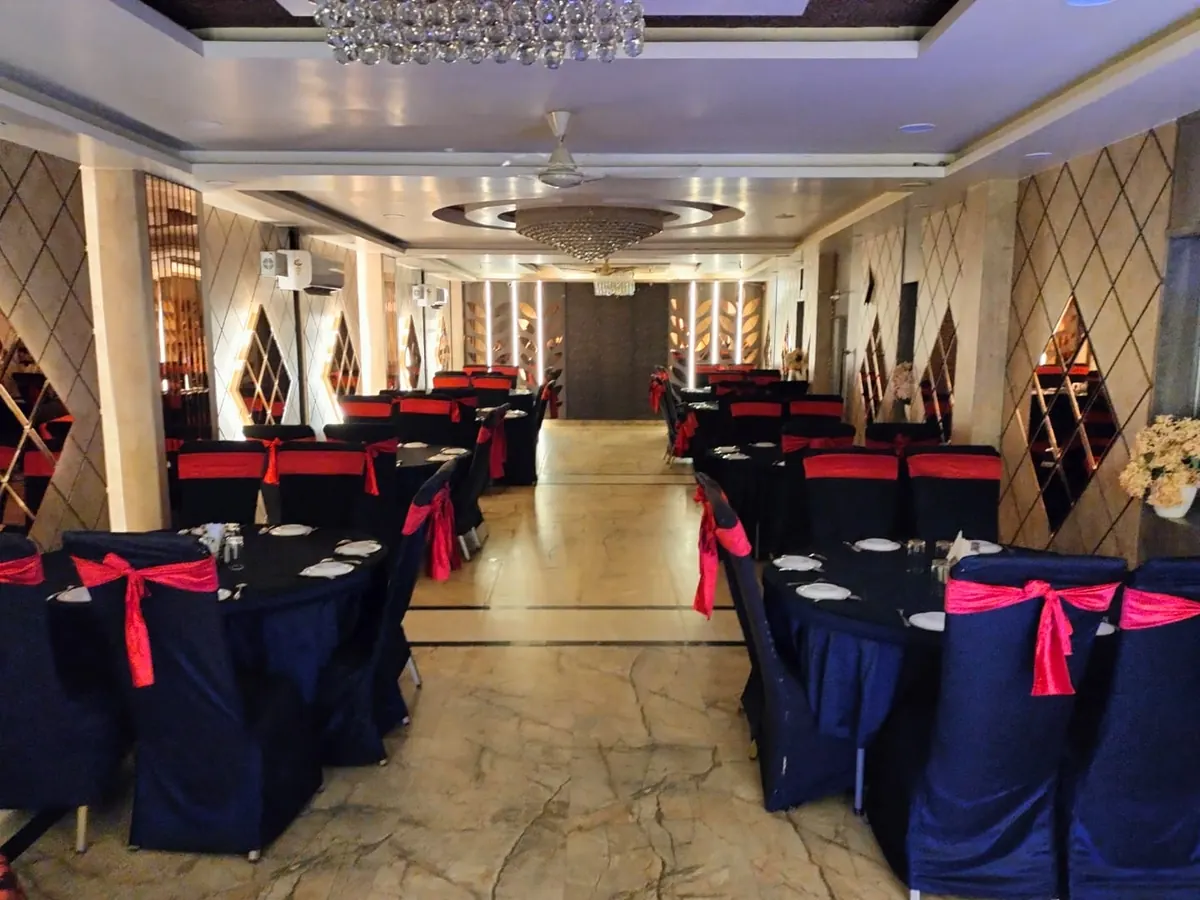
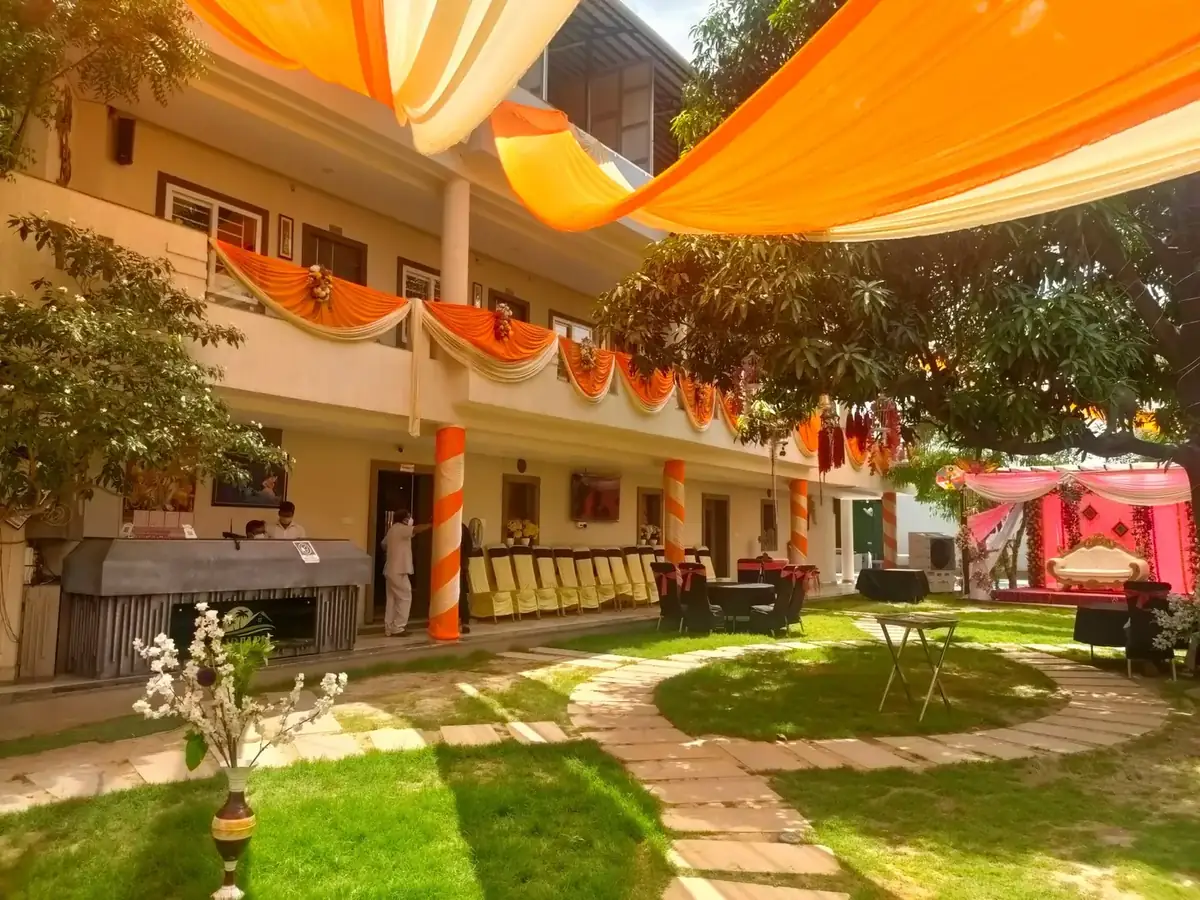
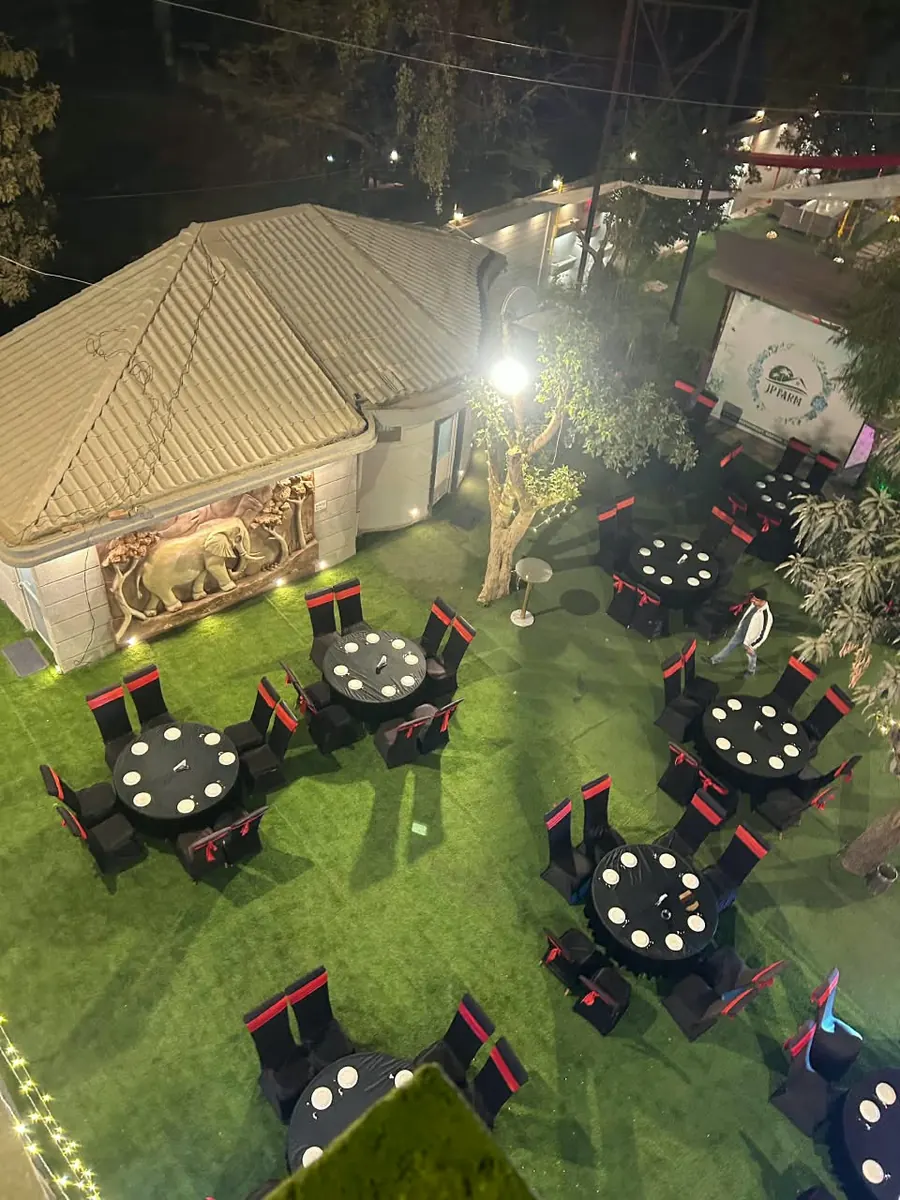
We have an in-house multi-cuisine restaurant and provide catering for functions held at our venue on Gwalior Road, Jhansi, from weddings and receptions to birthdays, kitty parties and dealer meets. Because the kitchen is on the same campus as our two banquet halls and two garden lawns, food travels a few steps rather than across the city.
Menus and per-plate rates depend on the function, the season, the menu you choose and your guest count, so we do not publish a fixed price list. The best way to get an accurate figure is to call or WhatsApp us on 9935677964 or 7525934333 with your date, approximate guest count and the kind of menu you have in mind. You can also look at our banquet halls and lawns and our restaurant before you visit.
“I attand a dealer meet in this property, Everything is well maintained and food is very tasty”
Vishal Jain, Google review
Frequently asked questions
What does per-plate catering include?
Usually one guest’s full meal for the event: welcome drinks, starters, main course, salads and desserts from an agreed menu, plus buffet setup and serving staff. Water, tea and coffee, extra live counters and taxes may or may not be included. Always ask for the inclusions in writing.
What happens if fewer guests come than the number we guaranteed?
You normally pay for the full guaranteed number, because the caterer has already bought ingredients and booked staff. This is why it is wise to guarantee slightly below your best estimate and confirm the final figure a few days before the event.
What if more guests come than we guaranteed?
Extra plates are usually charged at the agreed rate, sometimes slightly higher. Caterers prepare a small buffer, but if you expect many more people, tell them in advance so food does not run short.
Is GST included in per-plate rates?
It depends on the caterer. Some quote an all-inclusive rate, while others add GST on top. Ask for tax to be shown as a separate line so you can compare quotes on the same basis.
Are children charged for food at weddings?
Policies differ. Some caterers let very young children eat free, some charge a reduced rate, and some count every guest as a full plate. Agree on the age cut-off and how children will be counted before the event.
How can we reduce catering costs?
Serve fewer but better dishes, remove overlapping items, use seasonal vegetables, limit live counters and keep daytime functions lighter. Using the venue’s own kitchen also avoids transport and setup charges.
Does Hotel J P Farm publish per-plate prices?
No. Our rates depend on the menu, season and guest count. Call or WhatsApp 9935677964 or 7525934333 with your details for a quote.
We run 15 rooms, 2 banquet halls, 2 garden lawns and a restaurant on Gwalior Road, Jhansi, and host weddings and parties every season. These guides come from what our guests ask us most.
Keep reading

Food & Catering
Wedding Menu Ideas: Planning Food Your Guests Will Remember
Food & Catering