Mehendi Function Planning: Setup, Timing and Seating
Quick answer
Hold the mehendi one to two days before the wedding, since henna darkens over 24 to 72 hours. Start the bride first, book one artist per 10 to 15 guests, give artists bright light and low seating, serve finger food, and choose a lawn by day in winter or an AC hall in summer.
The mehendi function is the most relaxed event in a wedding week, and also one of the easiest to get wrong. It runs for hours, the bride can’t move her hands, artists need good light, guests need to be fed without smudging their designs, and the colour has to peak on the wedding day itself. Get the timing, setup and seating right and it becomes the afternoon everyone talks about.
This guide walks you through each decision in order: when to hold the mehendi, how long it takes, how many artists you need, how to lay out the space, what to serve, and the small details that keep the bride comfortable. It applies whether you’re planning an intimate family afternoon or a full mehendi party with music and dancing in Jhansi.
When should the mehendi function be held?
Mehndi paste is made from the dried, powdered leaves of the henna plant, Lawsonia inermis. According to Wikipedia, the stain is pale orange when the paste first comes off and darkens through oxidation over about 24 to 72 hours, ending up a reddish-brown that lasts roughly one to three weeks. That single fact decides your timing.
- One to two days before the wedding is the usual window, so the colour is at its deepest on the wedding day.
- Same-day mehendi leaves the bride with a pale orange design for the pheras and photos, so avoid it.
- Three or more days before works for guests, but the bride’s colour may start to fade by the reception if it’s a few days after the wedding.
If haldi is on the same day, schedule haldi in the morning and mehendi from the afternoon. Turmeric and water on freshly applied mehendi is a bad mix, and the bride will need a bath between the two. Our haldi decoration guide covers the morning half of that day.
How long does a mehendi function take?
Plan the function around the bride’s application time, which is the longest single task of the day. A full bridal design on hands and feet can take several hours; ask your artist for a realistic estimate based on the design you’ve chosen, then add an hour of buffer. Guests take far less time, usually a simple design on one or both hands.
| Time | What happens | Notes |
|---|---|---|
| 11:00 am | Artists arrive, set up stations | Check lighting and seating before guests come. |
| 11:30 am | Bride’s application begins | Bride eats a proper meal before starting. |
| 1:00 pm | Guests arrive, welcome drinks | Close family first; others queue for artists. |
| 1:30 pm | Guest mehendi stations open | Use a token or list system to avoid crowding. |
| 2:00 pm | Lunch or snacks served | Finger food that can be fed to those with wet hands. |
| 3:30 pm | Music, dholak, dancing | Bride watches from her seat while the paste dries. |
| 5:00 pm | Bride’s design complete, drying time | Lemon-sugar dabbing, if the artist recommends it. |
| 6:00 pm onwards | Tea, wrap up or move into sangeet | If sangeet follows, give the bride a break first. |
Many families combine mehendi in the afternoon with a sangeet in the evening. If you do, see our sangeet and cocktail night planning guide for the evening half.
How many mehendi artists do you need?
This is where most families underestimate. One artist is usually busy with the bride for most of the day, so plan for her separately. For guests, a rough rule is one artist for every 10 to 15 women who want mehendi, depending on design complexity and how long the function runs.
| Guests wanting mehendi | Suggested artists for guests | Plus |
|---|---|---|
| Up to 15 | 1 | 1 for the bride |
| 15 to 30 | 2 | 1 for the bride |
| 30 to 50 | 3 to 4 | 1 for the bride |
| 50 plus | 5 or more, or limit designs to one hand | 1 or 2 for the bride |
When booking artists, confirm:
- That they use natural henna paste. Wikipedia notes that so-called “black henna” can contain the synthetic dye p-phenylenediamine (PPD), which may cause moderate to severe skin reactions. Avoid any paste promising instant black colour.
- A patch test for the bride a week or two before, especially if she has sensitive skin.
- How many hours they’ll stay, and the rate for extra time.
- Whether they bring their own cones, stools and lamps.
- A design trial or reference photos. Many brides hide the groom’s name or initials in the pattern, a tradition Wikipedia also mentions, so tell the artist in advance.
How should you set up the space?
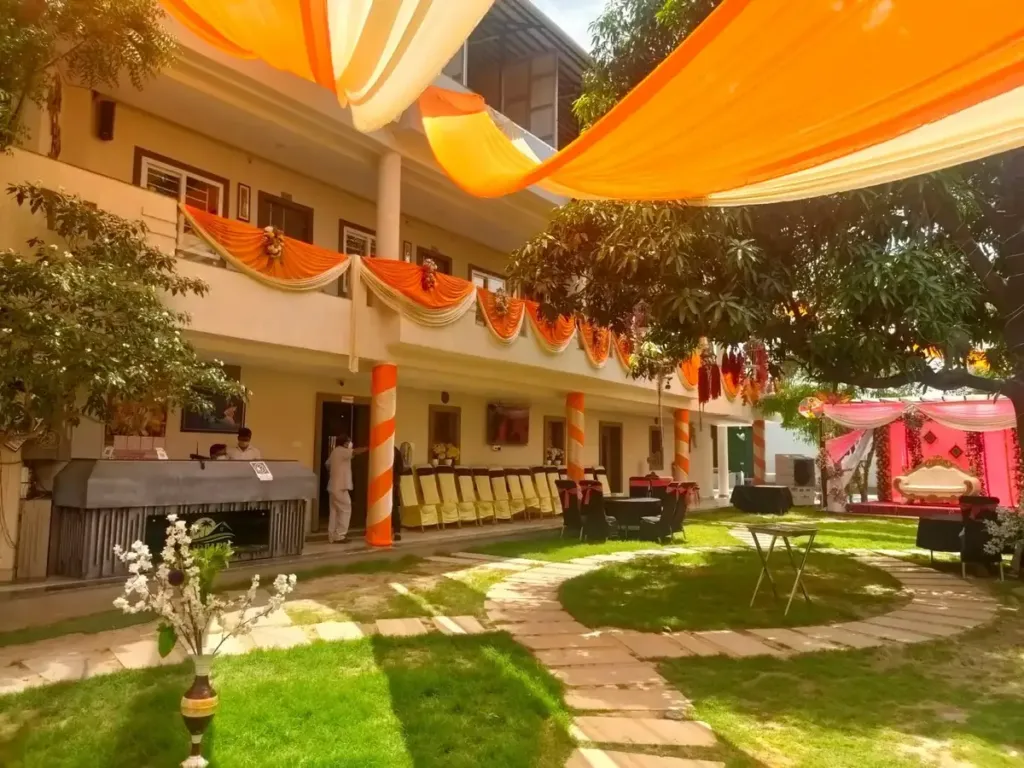
A mehendi setup has three zones: the bride’s seat, the artists’ stations, and the guest area with food and music. Keep them close enough that the bride feels part of the party, but separate enough that artists aren’t jostled.
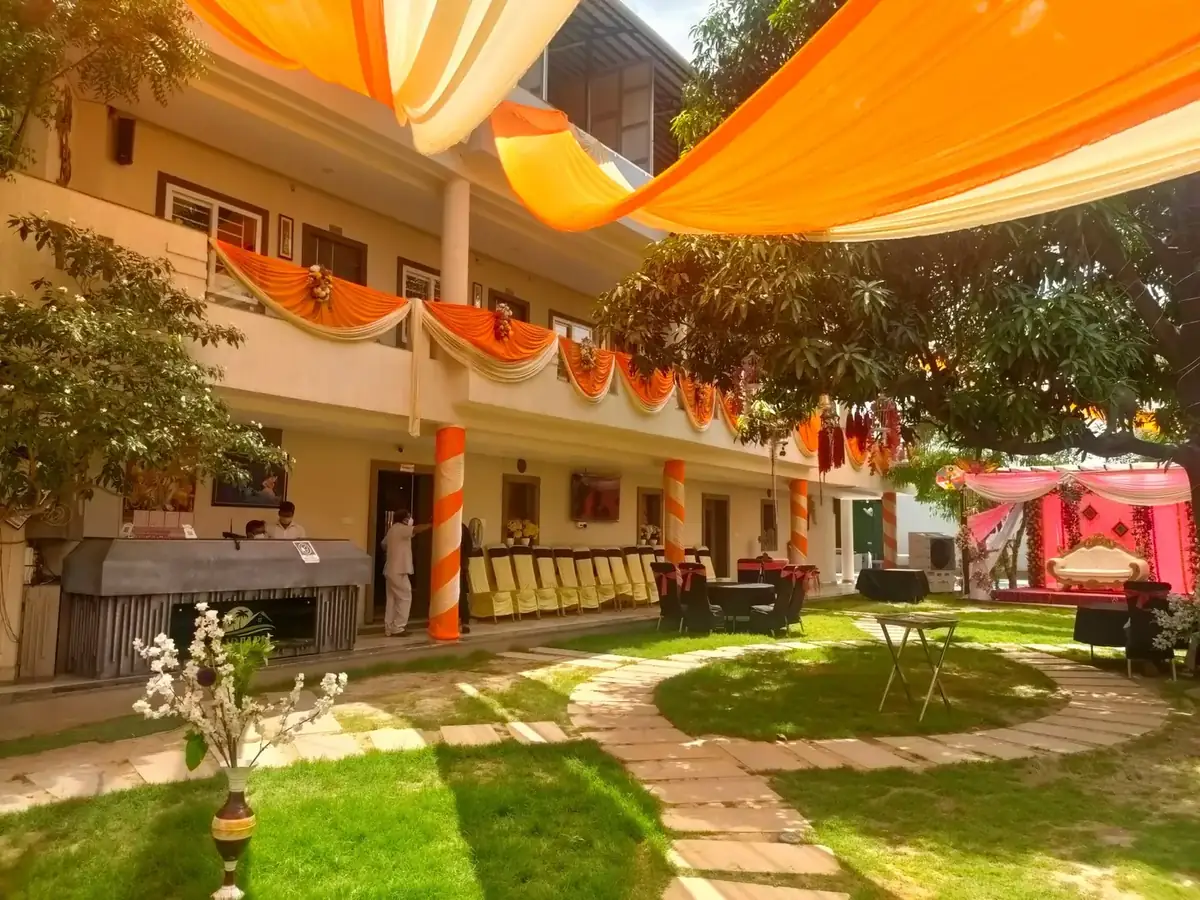
The bride’s seat
- A wide, low sofa or diwan with back support and cushions; she will be sitting for hours.
- A footstool or low table so the artist can reach her feet comfortably.
- Shade if outdoors, and a pedestal fan nearby to help the paste dry.
- A decorated backdrop behind her, since this is where most photos will be taken.
Artist stations
- A low stool for the artist and a chair or cushion for the guest, with a small table or armrest for the hand.
- Good, even daylight or bright white lamps. Artists struggle under coloured fairy lights alone.
- Tissue, cotton and a bin at each station.
- A sign-up list or token system run by a cousin, so guests know when it’s their turn.
Guest area
- Low seating such as gaddas, floor cushions or sofas in a loose circle, which suits the informal mood.
- A dholak corner or speaker for songs.
- Props for photos: umbrellas, marigold strings, cane baskets, kites.
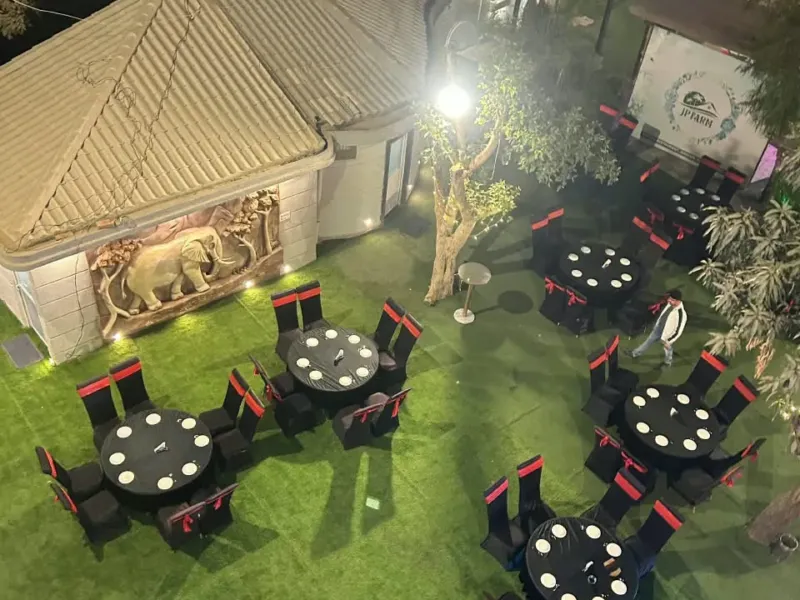
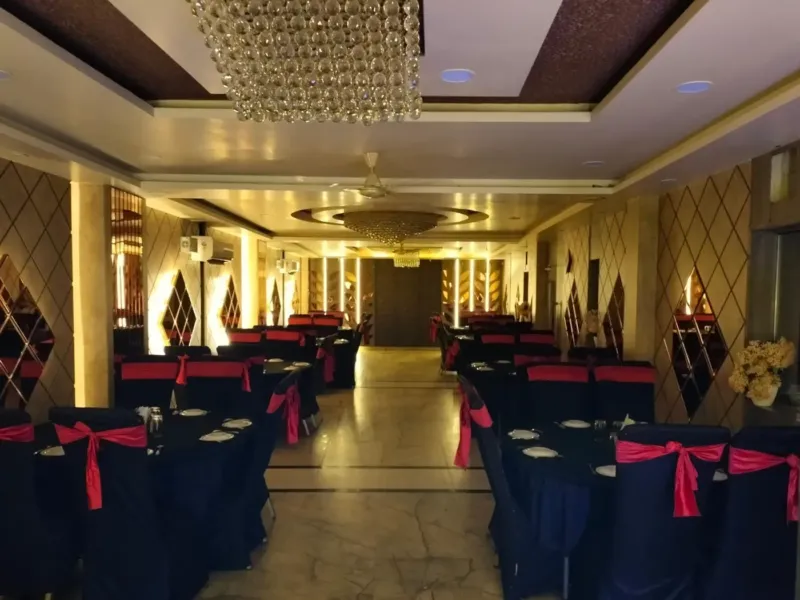
Lawn or banquet hall: which suits a mehendi?
| Factor | Garden lawn | Banquet hall |
|---|---|---|
| Natural light for artists | Excellent by day | Depends on lighting; ask for bright white lights |
| Weather | Best from October to March in Bundelkhand | Comfortable all year with AC |
| Photos | Colourful drapes and greenery | Controlled backdrop, no glare |
| Space for dancing | Plenty | Depends on the hall layout |
| Drying the paste | Warm air helps | AC slows drying slightly; keep a fan |
For a winter wedding, a lawn by day is hard to beat. For a summer or monsoon wedding, an air-conditioned hall keeps the bride and guests comfortable through a long afternoon.
What should you serve at a mehendi function?
The menu needs to work for people whose hands are wet with paste. Think small, bite-sized and easy to feed.
- Welcome drinks with straws: aam panna, jaljeera, lassi, shikanji or nimbu pani.
- Finger food: paneer tikka on sticks, mini kachoris, dhokla, cutlets, mini samosas, fruit chaat in cups.
- Chaat counter: golgappe and papdi chaat are favourites, though guests with fresh mehendi will need help.
- Lunch: a simple spread of dal, a paneer dish, sabzi, rice and puri, served after the first round of mehendi.
- Tea and snacks in the late afternoon as the function winds down.
Assign two or three cousins or friends as “feeders” for the bride and guests with wet hands. It sounds small, but it keeps designs intact. For the full wedding menu, see our wedding menu ideas.
How do you keep the bride comfortable during mehendi?
- Make sure she eats a full meal and uses the washroom before application begins.
- Keep her phone with a cousin who can answer calls and reply to messages for her.
- Have a straw and a bottle of water ready next to her.
- Choose loose, comfortable clothing with short or easily rolled sleeves.
- Avoid washing the hands for as long as the artist advises once the paste is removed.
- Plan a rest gap between mehendi and any evening event.
How Hotel J P Farm hosts mehendi functions
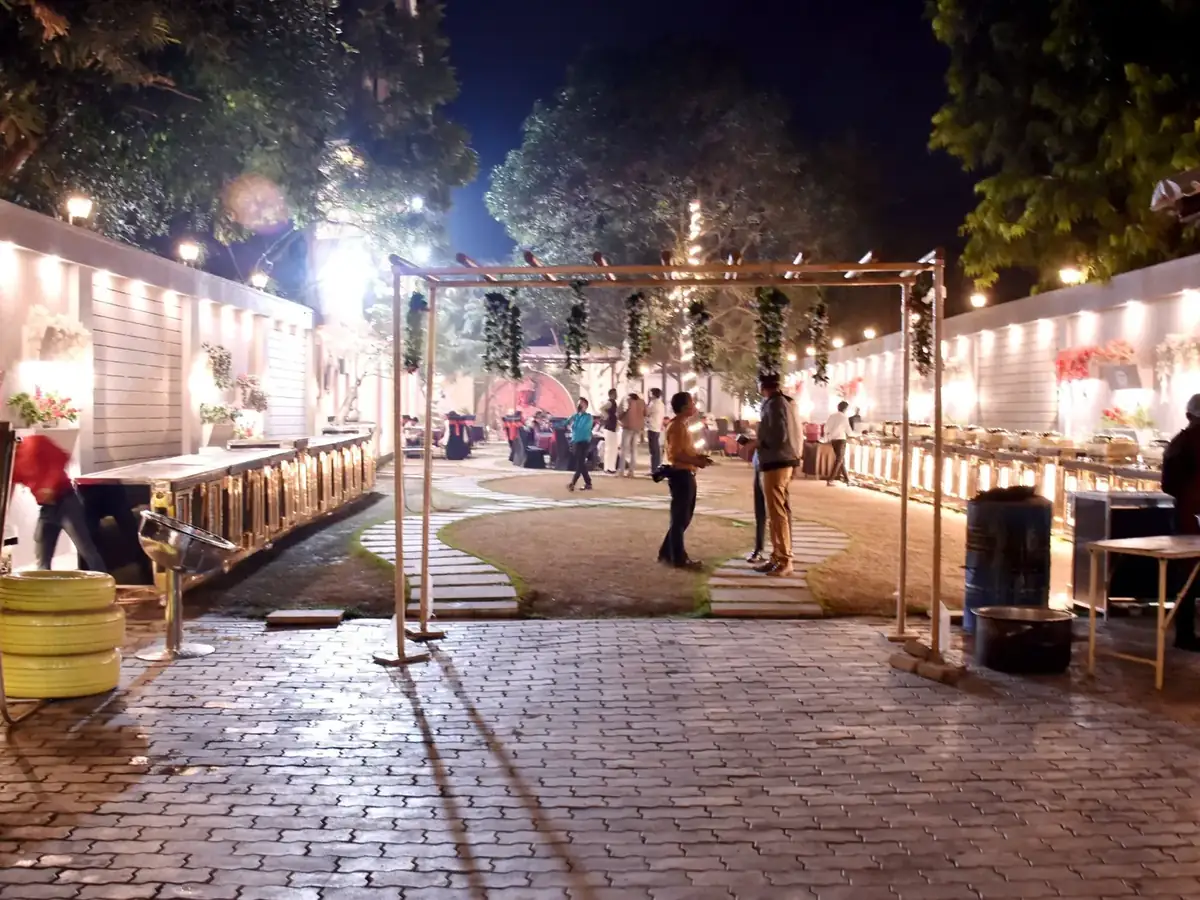
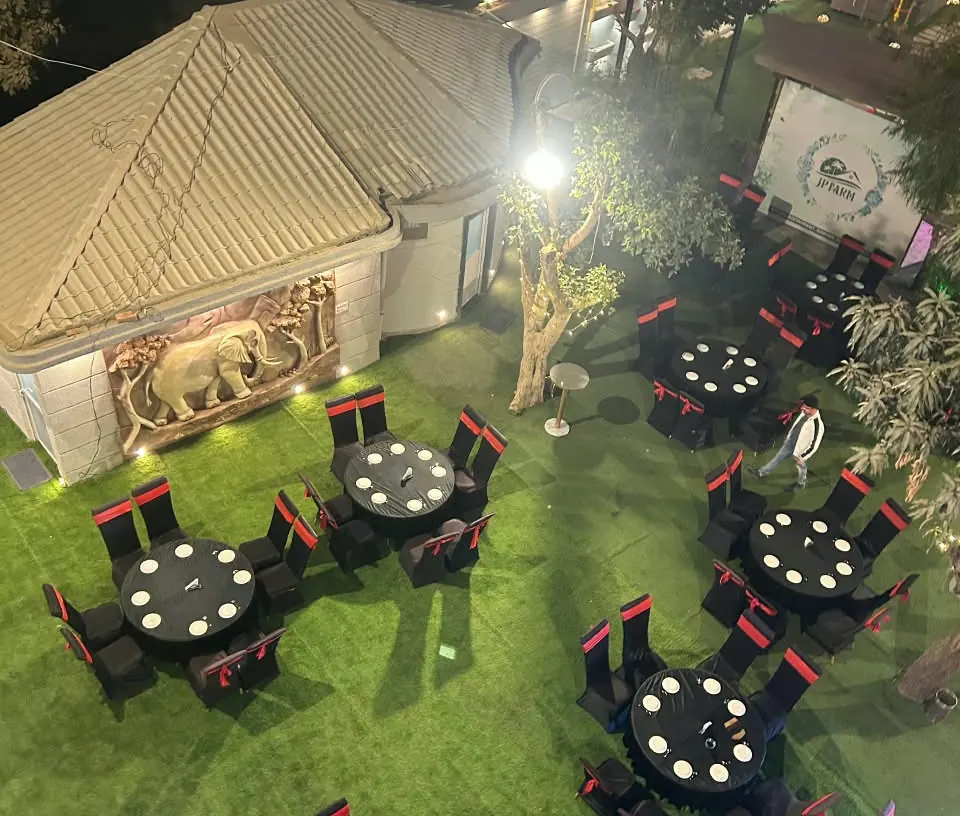
Our campus on Gwalior Road, Jhansi, has two garden lawns and two banquet halls, so you can hold a daytime mehendi on the lawn and move into a hall or the second lawn for the evening without changing venues. One lawn has a pergola and stage area that suits the bride’s seat; the other is lit with string lights at night, which works well if the mehendi runs into sangeet. Our in-house multi-cuisine restaurant handles catering for functions held at the venue, and we have 15 AC rooms so the bride and close family can rest or get ready on site.
See our wedding venue in Jhansi page for the full setup, and if family is coming from out of town, read our guide to rooms for wedding guests. For decoration options and food prices, call or WhatsApp 9935677964 or 7525934333.
“I recently visited this venue to attend a marriage function, and I was really impressed. The rooms were well-maintained and comfortable, and the decoration was beautifully done. The overall ambience made the event feel special and well-organized. A very nice place for weddings, receptions, and other functions!”
Shubham Sharma, Google review
Mehendi function checklist
| When | Task |
|---|---|
| 6 to 8 weeks before | Book the venue and the bridal mehendi artist. |
| 4 weeks before | Book guest artists; finalise date and timing with haldi and sangeet. |
| 2 to 3 weeks before | Bride’s patch test and design trial; decide decoration and menu. |
| 1 week before | Confirm head count, music, props, and feeders. |
| Day before | Confirm artist arrival time and the bride’s outfit. |
| On the day | Check lighting, seating, fans and artist stations before guests arrive. |
Frequently asked questions
How many days before the wedding should mehendi be applied?
One to two days before is ideal. Henna darkens through oxidation over about 24 to 72 hours, so applying it then means the colour is at its deepest on the wedding day. Same-day application usually leaves a pale orange stain.
How long does bridal mehendi take?
A full bridal design on hands and feet can take several hours, depending on how detailed it is. Ask your artist for an estimate based on your chosen design and add an hour of buffer. Start the bride’s application before guests arrive.
How many mehendi artists do I need for guests?
Roughly one artist for every 10 to 15 guests who want mehendi, plus a separate artist for the bride. For larger groups, either add artists or limit guest designs to one hand so the queue keeps moving.
Is black henna safe?
Be careful with it. Some “black henna” contains the synthetic dye PPD, which can cause moderate to severe allergic skin reactions. Ask your artist to use natural henna paste and do a patch test for the bride in advance.
Can haldi and mehendi be held on the same day?
Yes, and many families do. Hold haldi in the morning and mehendi from the afternoon, with a break in between for the bride to bathe and eat. Turmeric and water on fresh mehendi can spoil the design.
Should a mehendi function be on a lawn or in a hall?
A lawn by day gives artists good natural light and suits winter weddings from October to March. An AC banquet hall is more comfortable in summer and the monsoon. Ask for bright white lighting at artist stations if you choose a hall.
Does Hotel J P Farm host mehendi functions?
Yes. We host mehendi, haldi and sangeet on our two garden lawns and in our two banquet halls on Gwalior Road, Jhansi, with catering from our in-house restaurant. Call or WhatsApp 9935677964 or 7525934333 to check dates and options.
Sources: Wikipedia: Mehndi, Wikipedia: Jhansi (climate)
We run 15 rooms, 2 banquet halls, 2 garden lawns and a restaurant on Gwalior Road, Jhansi, and host weddings and parties every season. These guides come from what our guests ask us most.