Rooms for Wedding Guests: How to Plan Baraat and Family Stays
Quick answer
List outstation guests by name, group them by family, and divide by people per room, adding a getting-ready room and one or two spare rooms. Book the baraat together, plan for their arrival time against check-in, choose the meal plan carefully, and confirm rates, GST, timings and cancellation terms in writing.
Ask any family that has hosted a wedding what caused the most last-minute phone calls, and many will say the rooms. Who is staying where, which uncle needs a ground-floor room, why the baraat arrived two hours before check-in, how many rooms were actually used: these small questions pile up during the busiest days of the wedding.
Good guest accommodation planning prevents most of this. It keeps elderly relatives comfortable, gives the baraat a place to rest and get ready, and makes your budget predictable. This guide walks you through how to estimate the number of rooms, how to allocate them, how to handle the baraat, what to put in writing with the hotel and how to keep costs under control. It is written for families planning weddings in and around Jhansi, but the steps work anywhere.
Who actually needs a room at an Indian wedding?
Not every guest needs a room. Local guests go home after the function. The people who need rooms usually fall into a few groups:
- The baraat or groom’s family when the wedding is in the bride’s city, often for one or two nights.
- Close family from out of town, such as grandparents, uncles, aunts and cousins who come for several functions.
- Elderly guests and young families who need rest between the haldi, mehendi, wedding and reception.
- VIP guests, such as the groom’s parents or senior relatives, for whom a better room is a mark of respect.
- Getting-ready rooms for the bride, the groom and their families on the wedding day, even if no one sleeps there.
Start by writing down these groups with names, not just numbers. A named list is much easier to turn into a rooming plan later.
How many rooms do you need for wedding guests?
A simple way to estimate is to count the outstation guests who will stay overnight and divide by the number of people per room. Most families end up with two adults per room, three or four in a family room, and a single room for some elderly guests who prefer privacy.
| Guest group | People | People per room | Rooms |
|---|---|---|---|
| Groom’s parents and siblings | 4 | 4 (family room) | 1 |
| Grandparents | 2 | 2 | 1 |
| Uncles and aunts (couples) | 12 | 2 | 6 |
| Cousins | 8 | 2 | 4 |
| Family with two young children | 4 | 4 (family room) | 1 |
| Getting-ready room for the groom | n/a | n/a | 1 |
| Total | 30 | 14 |
Add a buffer of one or two rooms for unexpected arrivals. It is usually easier to release a room in advance than to find one on the wedding night.
How should you plan rooms for the baraat?
The baraat often travels a long way, arrives tired and needs to look its best a few hours later. Plan their stay with these points in mind:
- Find out the arrival time early. Ask the groom’s family when they expect to reach, and share this with the hotel so rooms are ready.
- Check the check-in time. Standard check-in at many hotels is around noon. If the baraat arrives in the morning, ask the hotel about early check-in, or book the rooms from the previous night.
- Keep the baraat together. Rooms close to each other make it easy for the family to coordinate dressing, the sehra and the baraat procession.
- Arrange food on arrival. Tea and breakfast, or lunch, should be ready when they reach. A meal plan with breakfast included makes this simple.
- Plan the procession route. If the stay and the wedding venue are on the same campus, there is no need for transport between them.
- Plan the departure. After the vidaai, the groom’s family may leave the same night or the next morning. Confirm late check-out or an extra night in advance.
How do you allocate rooms fairly?
Room allocation is where family politics can creep in. A few rules keep it simple and fair:
- Seniority and health first. Elderly guests and anyone with mobility problems get the rooms closest to the lift, stairs or venue.
- Families with children together. Give them family rooms so parents and children are not split across rooms.
- The best room for the couple or the groom’s parents. A premium room is a thoughtful gesture for the newlyweds on the wedding night.
- Keep one person in charge. A cousin or family friend should hold the rooming list, collect keys and handle requests, so the hosts are not interrupted.
Make a rooming list with columns for room number, guest names, phone number, arrival time, departure time and any special needs. Share it with the hotel two or three days before the wedding.
What does a sample stay plan look like?
| Day | Who stays | Rooms needed | Notes |
|---|---|---|---|
| Day before (haldi, mehendi) | Close family from out of town | Few | Breakfast included helps guests start early |
| Wedding day | Baraat, close family, getting-ready rooms | Most | Ask about early check-in for the baraat |
| Day after (reception or departure) | Guests staying for the reception | Some | Confirm late check-out or the extra night |
How do you keep wedding accommodation costs under control?
Rooms can become a big part of the wedding budget if they are booked loosely. Here is how to control the cost:
- Book by name, not by number. Only book rooms for guests who have confirmed.
- Choose the right meal plan. EP is room only; CP includes breakfast. If guests will eat at the wedding anyway, a room-only plan with breakfast for those who need it may be enough. Our guide to EP, CP, MAP and AP meal plans explains the options.
- Understand GST. In India, GST on hotel rooms depends on the tariff per room per night. For example, the rate is 5% when the tariff is up to ₹7,500 per room per night, and 18% above that. Always ask whether a quote includes GST.
- Keep extras clear. Room service, laundry and minibar items should be billed to the guest or capped, so the host does not get a surprise at checkout.
- Use one campus where possible. When guests stay where the functions are held, you save on cars, drivers and fuel. Read why in our post on one-campus weddings.
For bigger groups, it helps to understand how hotel room blocks work, including cut-off dates and releasing unused rooms. We explain this in our guide to group room bookings for weddings.
What should you confirm in writing with the hotel?
- The number and type of rooms, and the dates for each.
- The tariff per room per night, the meal plan and whether GST is included.
- Check-in and check-out times, and any early check-in or late check-out you have agreed.
- The advance paid and the balance due, with the date it is due.
- The cancellation or reduction policy if fewer guests come.
- Who pays for extras such as room service: the host or the guest.
- ID rules: in India, hotels ask for photo ID for every adult guest, and foreign guests need their passport and visa.
Send the hotel your rooming list early, and ask guests to carry their ID, so check-in at the front desk goes quickly even when 20 people arrive at once.
How Hotel J P Farm hosts wedding guests
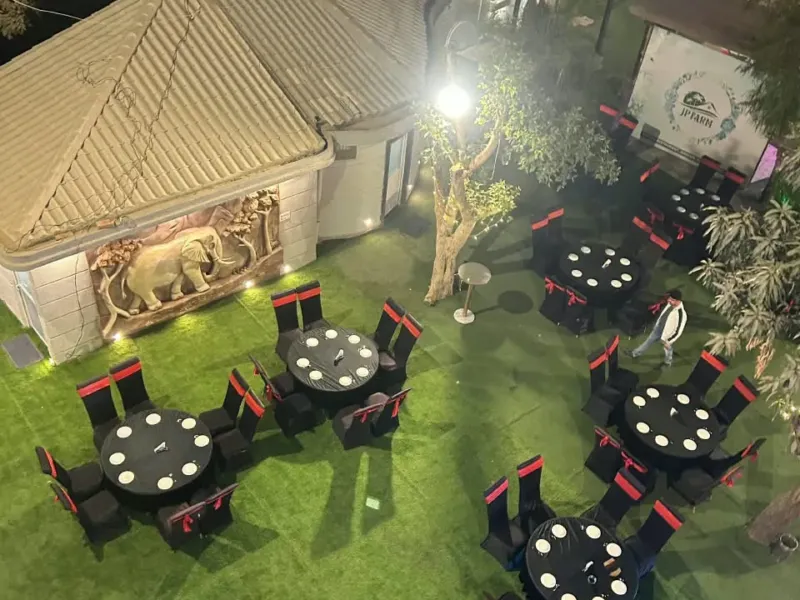
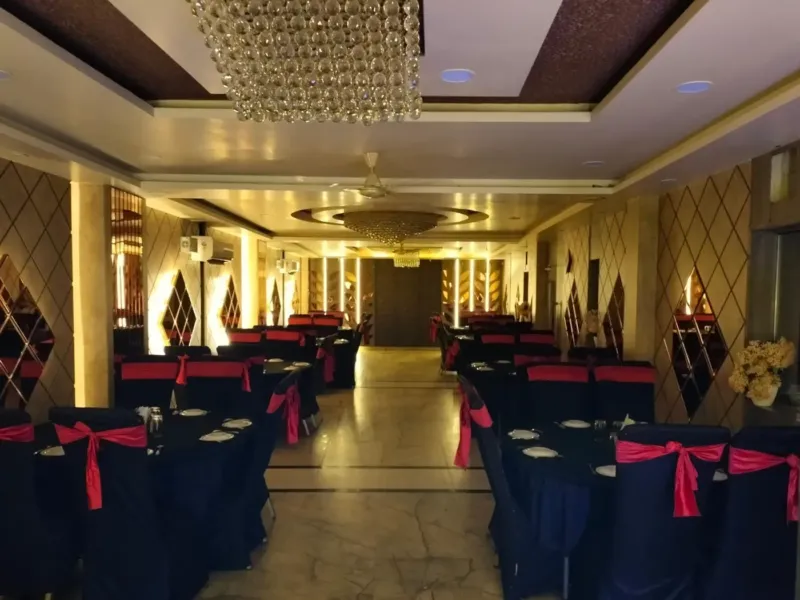
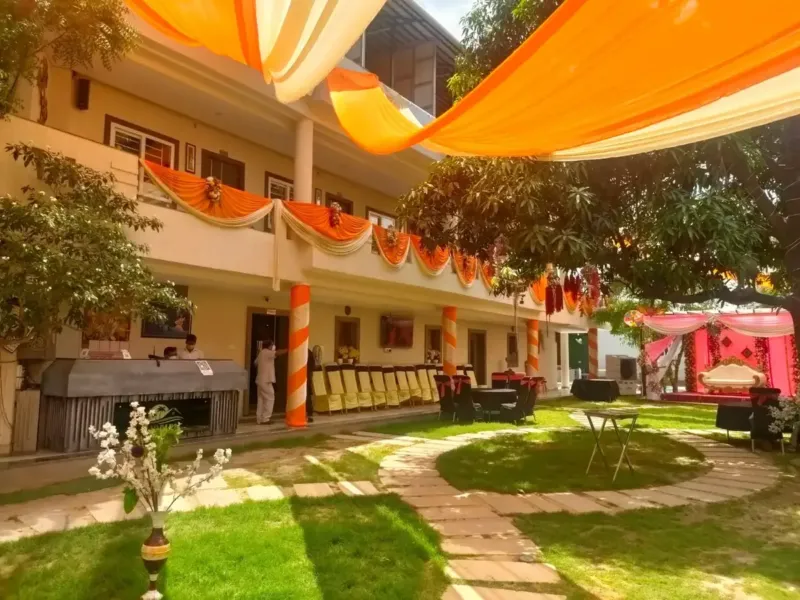
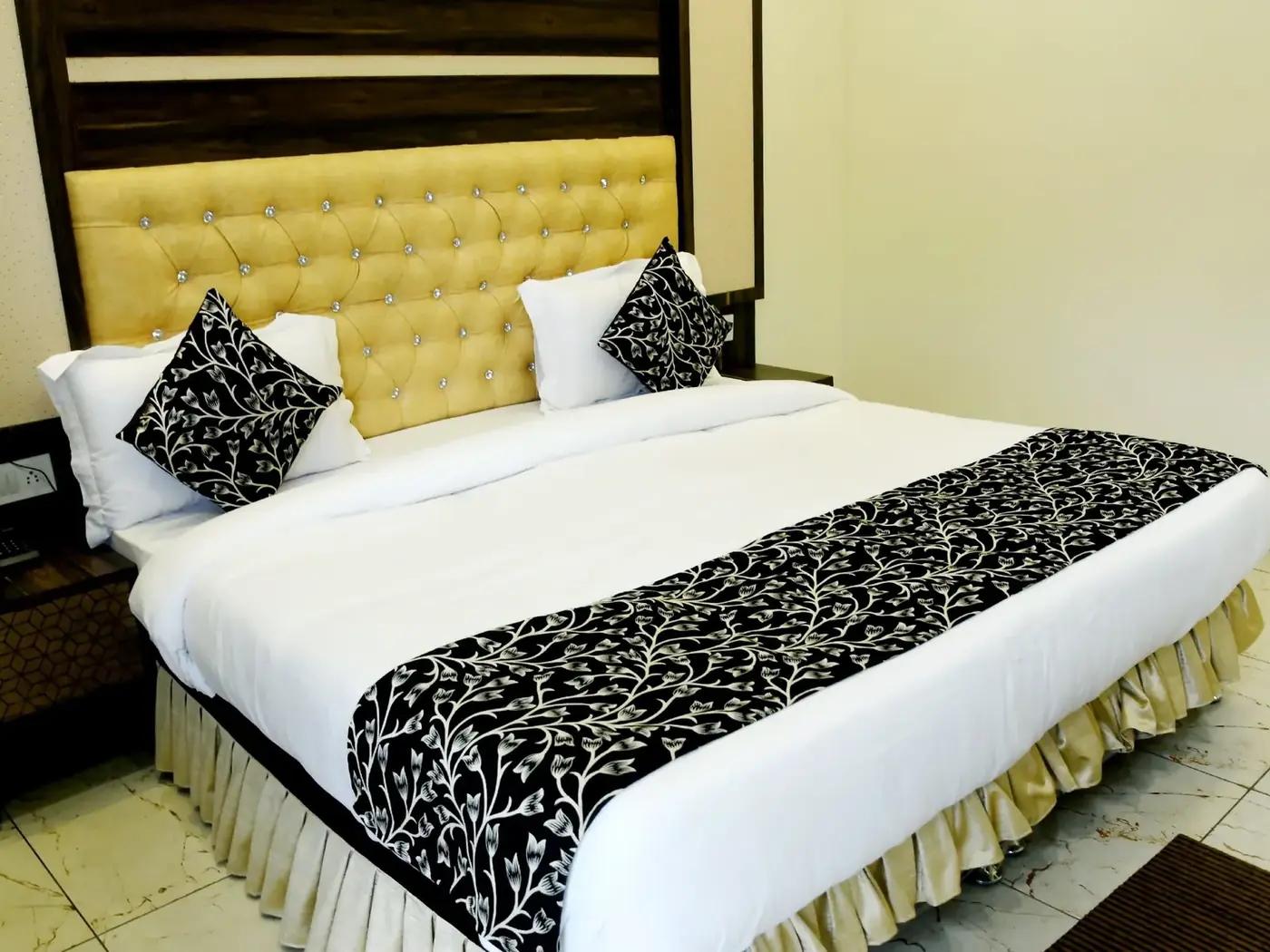
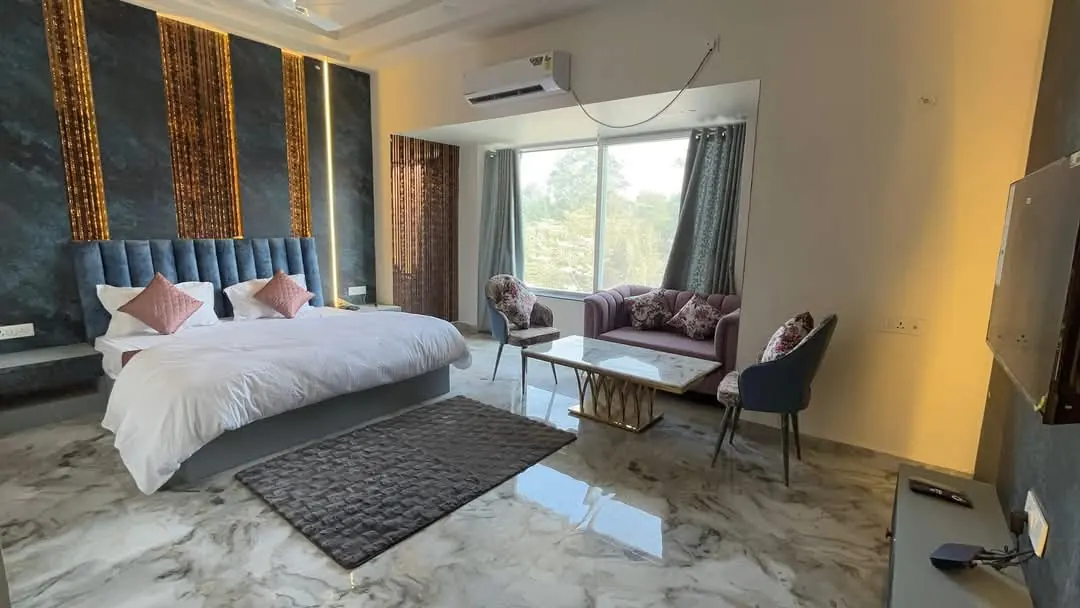
Hotel J P Farm is a hotel, banquet and wedding venue on a campus of about 2 acres on Gwalior Road, Jhansi. Because the rooms, the two banquet halls and the two garden lawns are on one campus, guests can rest between functions and walk to the venue. We have 15 AC rooms in four types:
| Room type | Rooms | Tariff (EP, per room per night, before GST) | Good for |
|---|---|---|---|
| Deluxe Room | 5 | ₹2,300 for 1 / ₹2,500 for 2 | Couples, cousins, single guests |
| Executive Room | 7 | ₹3,200 for 1 / ₹3,500 for 2 | Senior relatives, the groom’s family |
| Family Room | 2 | ₹4,199 for 1 up to ₹4,999 for 4 | Families with children, groups of 3 or 4 |
| Premium Room with Jacuzzi | 1 | ₹7,000 for 1 / ₹7,500 for 2 | The newlyweds or VIP guests |
Breakfast (CP) adds ₹500 per person per night, except in the Family Room, which has its own CP rates. One Family Room has two double beds; the other has one double and one single bed. All our room tariffs fall in the 5% GST slab. At the occupancy our rates are listed for, the 15 rooms together sleep about 34 guests, which suits the baraat and close family for most weddings.
Check-in is at 12:00 noon and check-out at 11:00 am, and we need photo ID for every adult. Our in-house multi-cuisine restaurant provides room service and catering for functions held here, and there is free Wi-Fi and ample parking for guests who drive in. You can book rooms online on our rooms page with full payment or a 30% advance, or call or WhatsApp 9935677964 or 7525934333 to plan rooms together with your wedding at our venue.
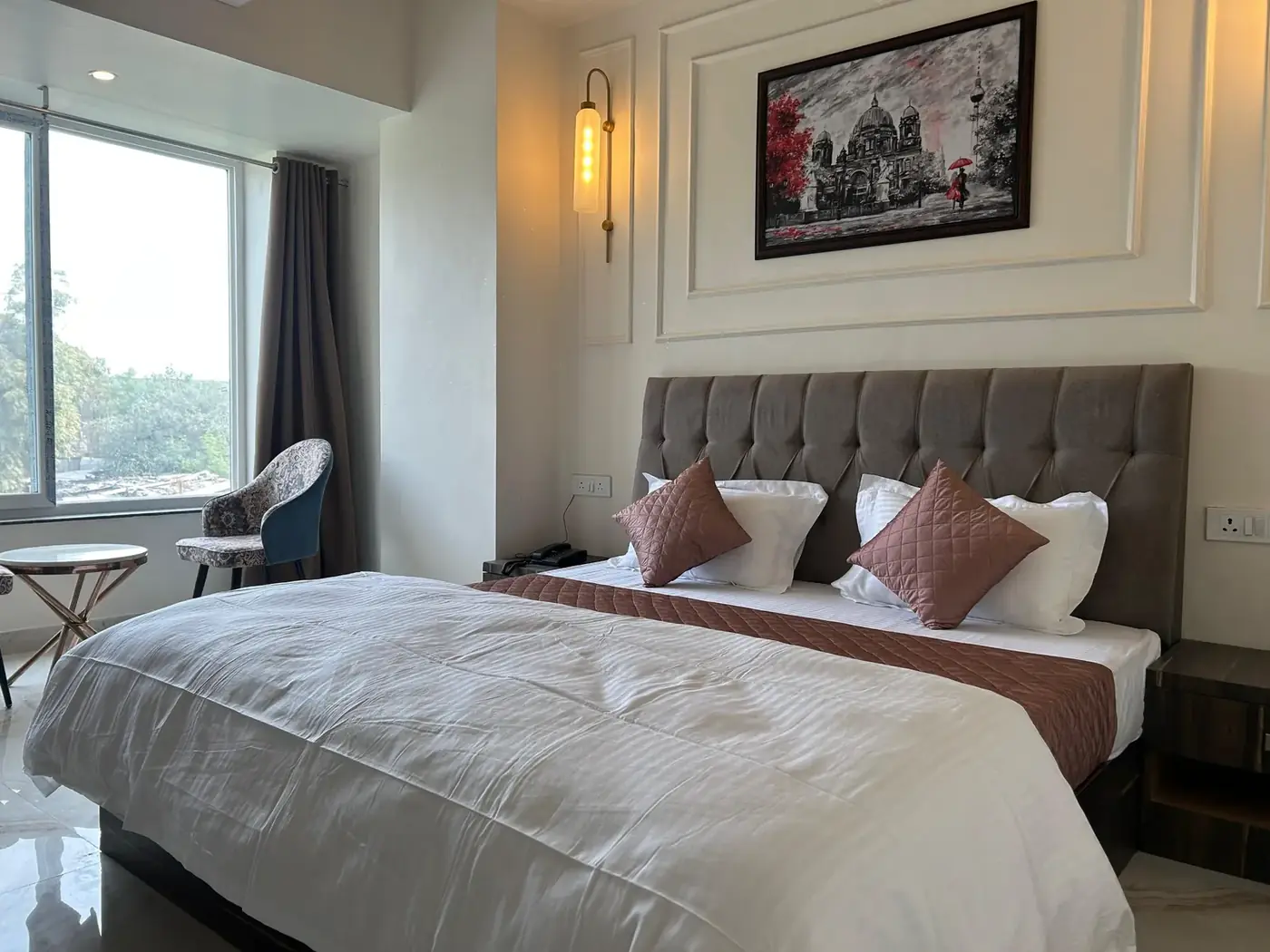
“I recently visited this venue to attend a marriage function, and I was really impressed. The rooms were well-maintained and comfortable, and the decoration was beautifully done. The overall ambience made the event feel special and well-organized. A very nice place for weddings, receptions, and other functions!”
Shubham Sharma, Google review
A short welcome for your guests
A small welcome makes outstation guests feel cared for, and it costs little. Ideas that families in Bundelkhand often use:
- A printed or WhatsApp schedule of all functions, with times and dress codes.
- A welcome note with the names and phone numbers of the family’s point person.
- Water bottles, a few snacks and some mithai in each room.
- For the baraat, garlands or a tilak at arrival.
- Information on getting to Jhansi for guests coming from far away. Share our guide on how to reach Jhansi by train, road and air.
Frequently asked questions
How many rooms should I book for a baraat?
Count the people who will stay overnight and divide by two for couples, or by three or four for families sharing a family room. Add a getting-ready room for the groom and one or two rooms as a buffer. Confirm the final number with the groom’s family at least a week before.
When should I book rooms for wedding guests?
Book as soon as the wedding date and venue are fixed, especially during the wedding season, when rooms fill quickly. You can confirm the final number of rooms closer to the date, as long as you know the hotel’s policy on reducing rooms.
Who pays for wedding guests’ rooms?
In most Indian weddings, the host family pays for the rooms of the baraat and close family. Extras such as room service and laundry are often paid by guests themselves. Agree on this with the hotel in writing so billing at checkout is smooth.
Is GST charged on hotel rooms for wedding guests?
Yes. GST on hotel rooms is based on the tariff per room per night: 5% when it is up to ₹7,500 and 18% above that. Ask whether every quote includes or excludes GST so you can compare correctly.
What if the baraat arrives before check-in time?
Tell the hotel the arrival time in advance and ask about early check-in. If the baraat will arrive early in the morning, the surest option is to book the rooms from the previous night so they are ready when guests walk in.
How many guests can stay at Hotel J P Farm?
We have 15 AC rooms: 5 Deluxe, 7 Executive, 2 Family and 1 Premium Room with Jacuzzi. At the occupancy our rates are listed for, that is about 34 guests. Call or WhatsApp us on 9935677964 or 7525934333 to plan rooms around your wedding dates.
Do wedding guests need ID to check in?
Yes. Hotels in India ask for photo ID for every adult guest, and foreign guests need their passport and visa. Ask your guests to carry ID so check-in is quick.
We run 15 rooms, 2 banquet halls, 2 garden lawns and a restaurant on Gwalior Road, Jhansi, and host weddings and parties every season. These guides come from what our guests ask us most.