Ring Ceremony Planning: Banquet Hall or Lawn?
Quick answer
Choose a banquet hall for afternoon ceremonies, small family groups and summer or monsoon dates, when Jhansi gets very hot or wet. Choose a lawn for large guest lists and evenings between November and February. If you are unsure of weather or numbers, pick a venue with both on one campus.
A ring ceremony is often the first time both families come together in public. Whether your family calls it a sagai, a roka, a mangni or simply the engagement, it sets the tone for everything that follows. Guests form their first impression of how the wedding will be run, and the couple gets their first set of photographs together as an engaged pair.
One of the earliest decisions is where to hold it: inside a banquet hall or out on a garden lawn. Both work well, but they suit different guest counts, seasons, times of day and moods. This guide compares the two honestly and gives you a planning checklist, a sample timeline and the questions to ask any venue in Jhansi before you pay an advance.
What happens at a ring ceremony, and how long does it take?
Customs vary from family to family and community to community, but most ring ceremonies in Bundelkhand and across north India include some version of these steps:
- Welcome of the families and introductions between relatives who have not met.
- A short puja or blessing, sometimes led by a pandit, often including tilak and the exchange of shagun gifts, sweets and fruit.
- The ring exchange, usually on a decorated stage or in front of a backdrop so everyone can see.
- Blessings from elders and a long round of photographs with each side of the family.
- A meal, which can be anything from high tea to a full dinner buffet.
The formal part rarely takes more than an hour. The full event, including arrival, photos and the meal, usually runs three to four hours. That matters when you compare venues, because you are booking the space for the whole evening, not just the ring exchange.
Banquet hall or lawn: how do they compare?
| Factor | Banquet hall | Garden lawn |
|---|---|---|
| Weather | Unaffected by heat, rain or cold | Best in the cool, dry months; needs a backup plan otherwise |
| Feel | Formal, polished, intimate | Open, relaxed, festive |
| Best time of day | Any time, including afternoons | Evenings, especially with lights |
| Guest count | Small to mid-size groups feel full and warm | Large groups spread out comfortably |
| Decor | Built-in features (chandeliers, panels) mean less to add | Needs a stage, lighting and a backdrop to create a focal point |
| Sound | Speeches and mantras are easy to hear | May need a microphone and speakers |
| Photos | Consistent indoor lighting | Beautiful at golden hour and under fairy lights |
| Children and elders | Comfortable seating, AC, close to washrooms | Space for children to play; elders need warm or shaded seating |
When is a banquet hall the better choice?
Choose a hall if any of these apply to you:
- Your date falls in summer or the monsoon. Jhansi has a semi-arid climate with sharp seasons. In May, the average daily maximum is about 42.5 °C, and July and August each bring around 250 mm of rain. An air-conditioned hall removes the risk entirely.
- The ceremony is in the afternoon. Daytime sun on a lawn can be harsh for much of the year. A hall keeps guests fresh for the photographs.
- The guest list is close family only. Thirty or forty people can look lost on a big lawn but will fill a hall and make it feel warm and lively.
- Your families prefer formality. A hall with chandeliers and a defined stage gives a dignified setting for the puja and the ring exchange.
- Clear sound matters. If a pandit is chanting or elders want to speak, an enclosed space helps everyone hear.
When is a lawn the better choice?
A lawn comes into its own in different conditions:
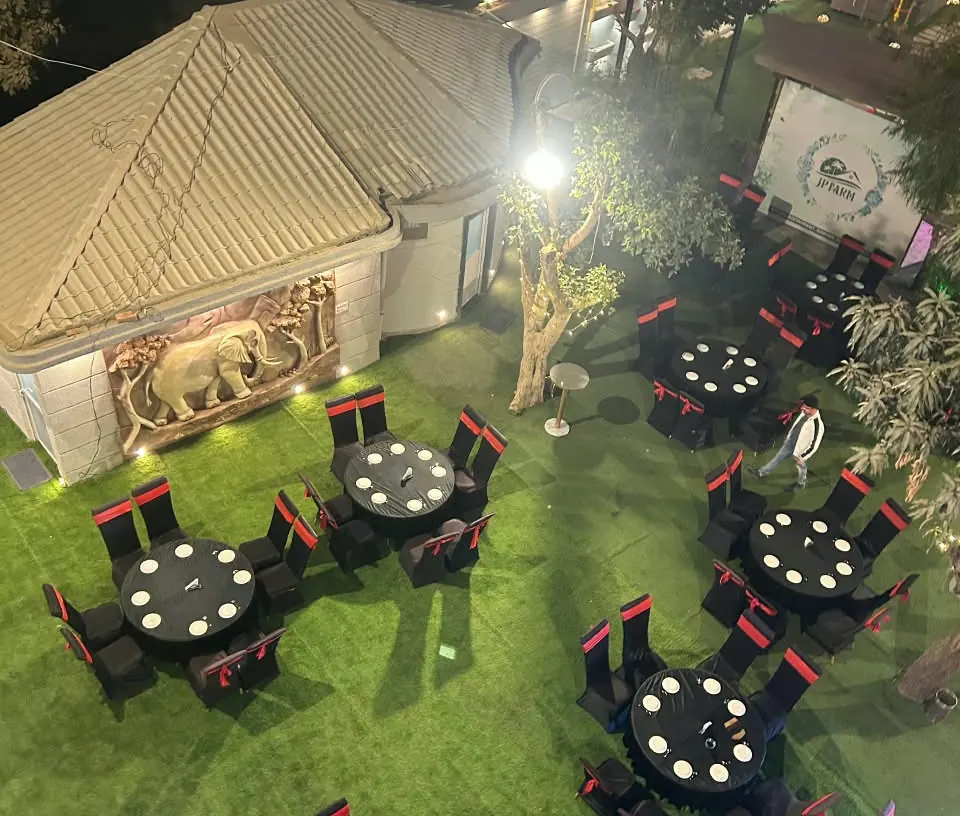
- You are holding the ceremony between November and February. These are Jhansi’s pleasant months. December averages a daytime high of about 25 °C and January about 23 °C, which is comfortable for an evening outdoors with a shawl.
- The guest list is large. When both families invite friends and neighbours, a lawn absorbs the crowd and lets people move around freely.
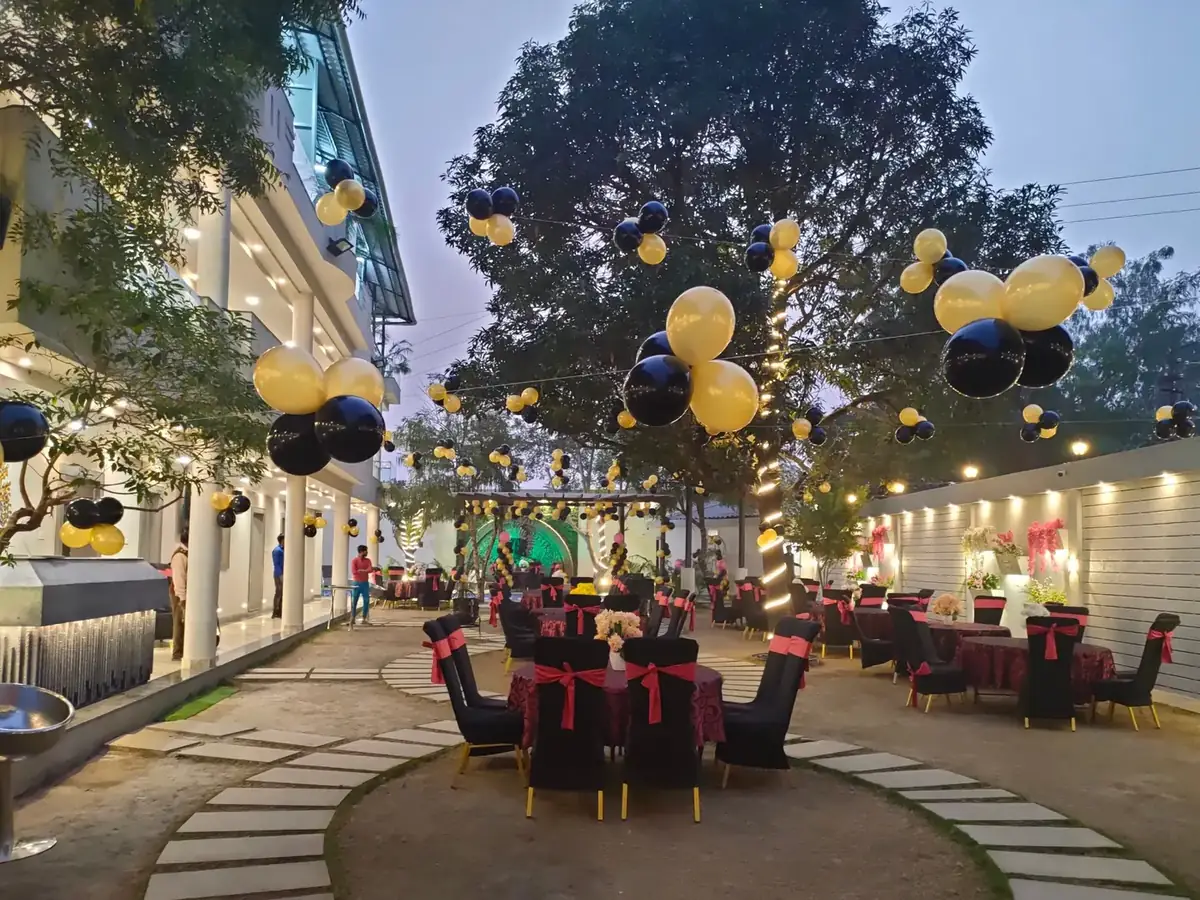
- You want a relaxed, festive mood. String lights, live counters and open space make a ring ceremony feel like a celebration rather than a formality.
- You love outdoor photos. The hour around sunset and the evening under lights give photographers a lot to work with.
One caution: winter nights in Jhansi get cold. January’s average minimum is around 8.6 °C. If your ceremony runs late, plan heaters near the elders’ seating, a warm welcome drink, and a covered area near the stage.
Can you use both a hall and a lawn for one ring ceremony?
Yes, and many families do. A common split is to hold the puja and ring exchange in the hall, where it is quiet and the lighting is controlled, and then move guests to the lawn for dinner and music. Another option is to book a hall as a backup in case the weather turns. If you want both, look for a venue where the hall and the lawn are on the same campus, so guests walk a few steps rather than drive.
How should you time the ring ceremony?
Choosing the date and muhurat
Many families fix the date with a pandit. Once you have two or three possible dates, check venue availability for all of them before you finalise. Auspicious dates in the wedding season are often booked months in advance.
A sample evening timeline
| Time | What happens |
|---|---|
| 6:00 pm | Families arrive; welcome drinks and snacks |
| 6:45 pm | Puja, tilak and shagun exchange |
| 7:30 pm | Ring exchange on stage |
| 7:45 pm | Blessings and family photographs |
| 8:30 pm | Dinner opens |
| 9:30 pm | Music and dancing (optional) |
| 10:30 pm | Families leave; outstation guests go to their rooms |
Leave buffers. Photographs with each branch of the family always take longer than planned, and dinner served late is the most common complaint at any function.
What should be on your ring ceremony checklist?
Six to eight weeks before
- Agree on the guest count with both families.
- Visit two or three venues and see both the hall and lawn options.
- Book the venue and confirm the menu style (high tea, snacks and dinner, or full buffet).
Three to four weeks before
- Order the rings and send them for sizing.
- Finalise stage decor and colour scheme.
- Book a photographer and discuss the shot list.
- Book rooms for relatives arriving from outside Jhansi.
The final week
- Confirm the final headcount with the caterer.
- Pack the puja thali, shagun gifts, sweets and ring boxes.
- Share the timeline with both families and the venue team.
- Assign one person from each side to coordinate on the day.
What should you ask a venue before booking a ring ceremony?
- Is the hall or lawn exclusively ours for the evening, or shared with another function?
- What is the backup if it rains or gets too cold on the lawn?
- Is catering in-house, and can we do a tasting?
- Is basic stage decor included, or do we arrange it separately?
- Are rooms available on the same campus for outstation family?
- How much parking is there?
- What advance is needed, and what is the cancellation policy?
Our full wedding venue checklist for Jhansi covers these questions in more depth, and the six-month wedding planning timeline shows where the ring ceremony fits in the wider plan.
How Hotel J P Farm fits a ring ceremony
We host ring ceremonies, roka and sagai functions regularly on our campus of about 2 acres on Gwalior Road, Jhansi. Because we have both indoor and outdoor spaces in one place, you do not have to choose a venue before you know the weather or the final guest count.
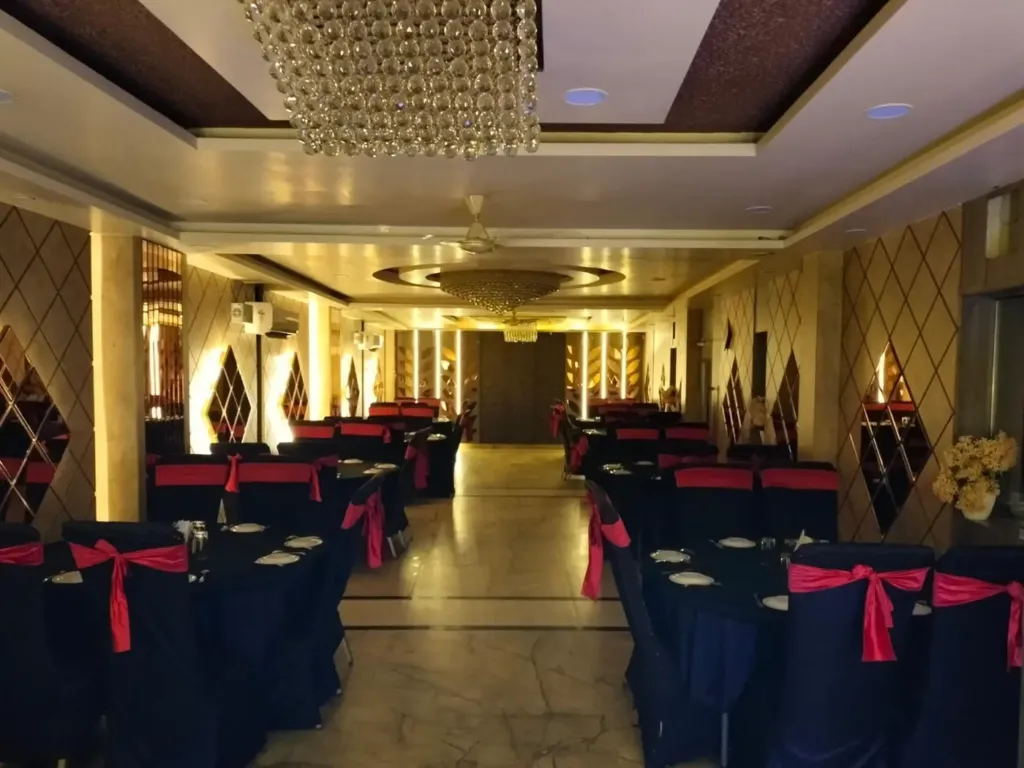
- Hall 1 has chandeliers and mirrored diamond panels, a formal setting for the puja and ring exchange.
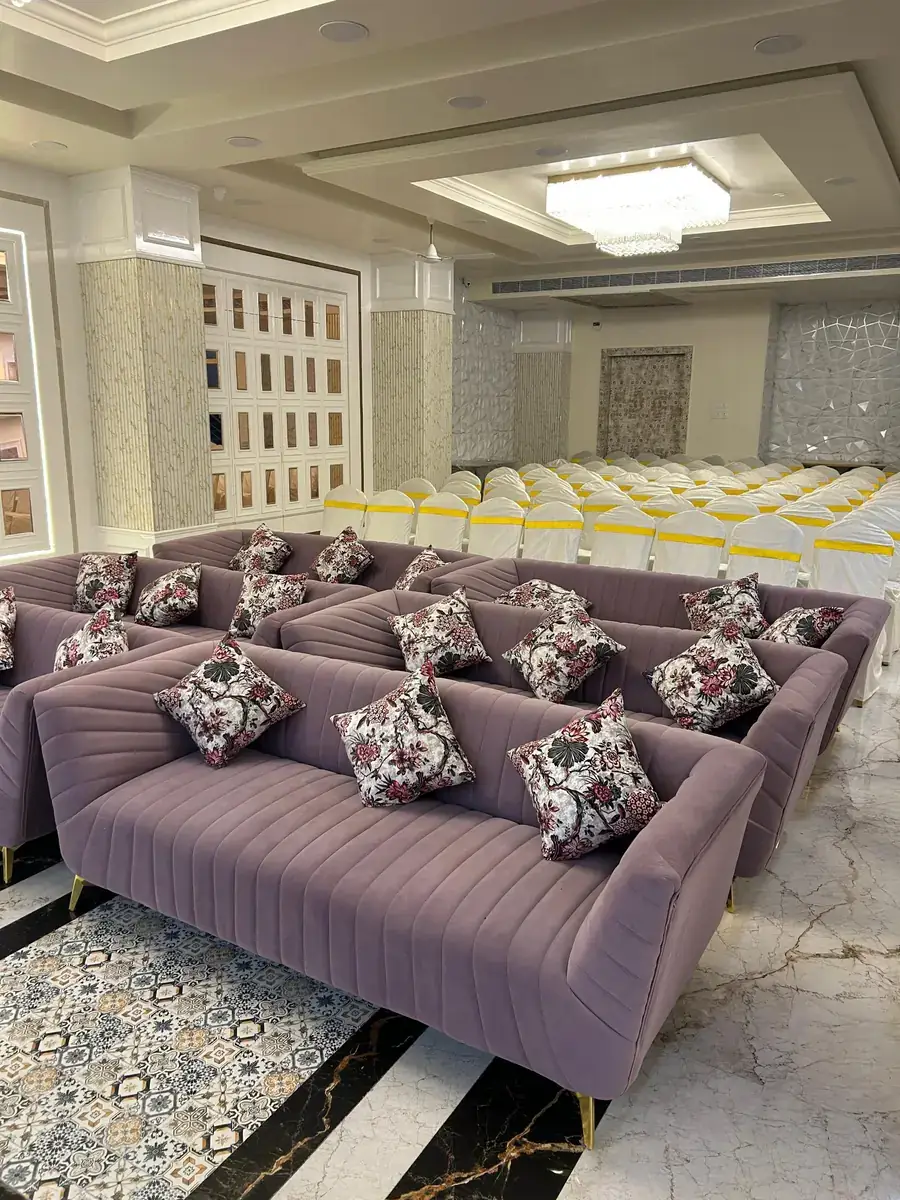
- Hall 2 has white panels and lilac sofa seating, well suited to close-family ceremonies.
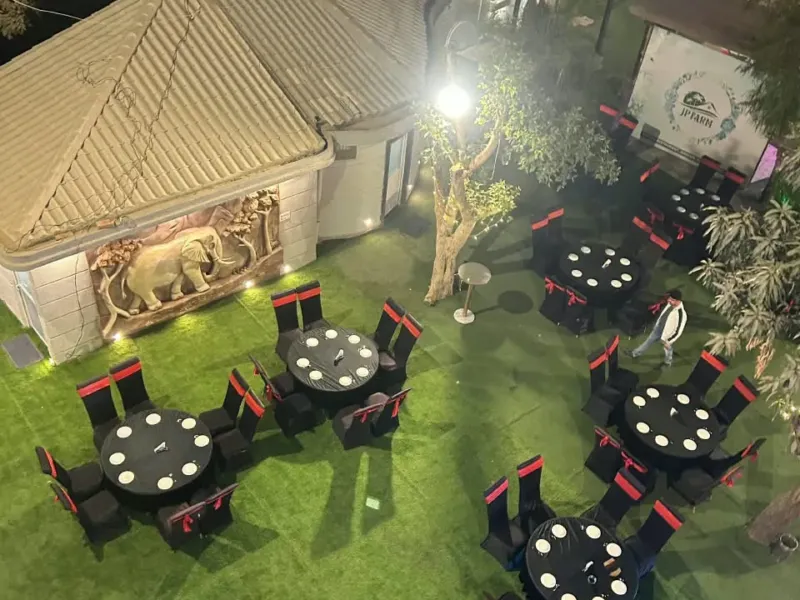
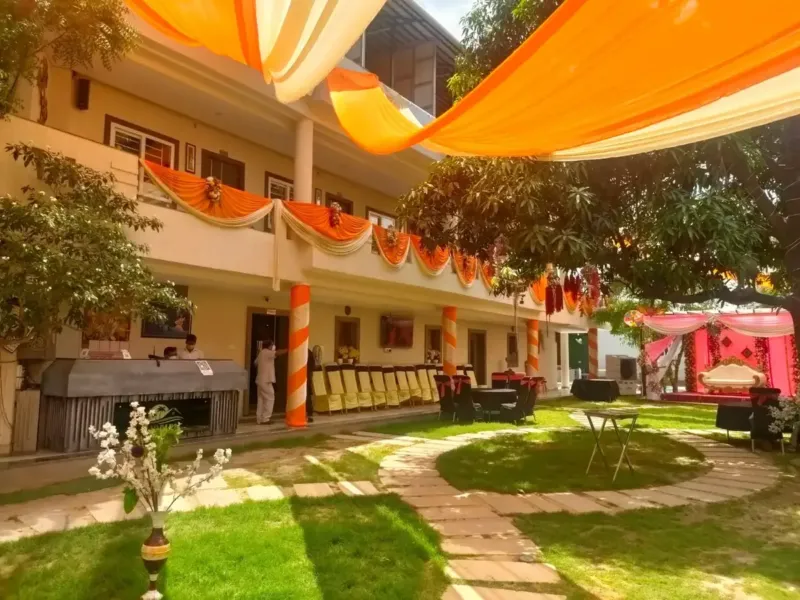
- Two garden lawns: one lit with string lights at night, and one with a pergola and stage area that works as a ready focal point for the rings.
- In-house catering from our multi-cuisine kitchen, ample parking and free Wi-Fi.
- 15 AC rooms on the same campus for relatives travelling in. See our rooms and booking page.
You can see more on our wedding venue page, or call or WhatsApp us on 9935677964 or 7525934333 to check dates and walk through both halls and lawns.
“I recently visited this venue to attend a marriage function, and I was really impressed. The rooms were well-maintained and comfortable, and the decoration was beautifully done. The overall ambience made the event feel special and well-organized. A very nice place for weddings, receptions, and other functions!”
Shubham Sharma, Google review
Frequently asked questions
Is a banquet hall or lawn better for a ring ceremony?
A banquet hall is better for afternoon ceremonies, small family groups and summer or monsoon dates. A lawn is better for large guest lists and evenings between November and February. If you are unsure, choose a venue that offers both on one campus.
How long does a ring ceremony take?
The puja and ring exchange usually take under an hour. With arrival, photographs and the meal, plan for three to four hours in total. Book the venue for the whole evening.
What is the best season for an outdoor ring ceremony in Jhansi?
November to February is the most comfortable. December and January have average daytime highs of roughly 23 to 25 °C. Nights can drop below 10 °C, so arrange heaters and warm drinks for late evenings.
How early should we book a venue for a ring ceremony?
Six to eight weeks is a good minimum. If your date is an auspicious one in the wedding season, book as soon as the date is fixed, because popular venues fill up early.
Can we hold the ceremony indoors and dinner outdoors?
Yes. Many families hold the puja and ring exchange in a hall and move to a lawn for dinner and music. It works best when both spaces are on the same campus.
Do ring ceremony guests need rooms?
Relatives travelling from other cities often stay one night. Booking rooms at the venue saves late-night travel and lets families get ready on site. At Hotel J P Farm, check-in is at 12 noon and check-out at 11 am.
Sources: Jhansi, Wikipedia (climate data).
We run 15 rooms, 2 banquet halls, 2 garden lawns and a restaurant on Gwalior Road, Jhansi, and host weddings and parties every season. These guides come from what our guests ask us most.