
Rani Mahal, Jhansi: Visitor Guide
Quick answer
Rani Mahal is the palace in old Jhansi where Rani Lakshmibai lived and held court after 1853. Built in 1769 to 1796, it has a courtyard, six arched halls, a painted Darbar Hall and a sculpture collection. Allow about an hour, go in the morning, and check timings on the official site.
Most visitors to Jhansi head straight up the hill to the fort, and many leave without seeing the place where Rani Lakshmibai actually lived and held court in the years before the revolt of 1857. Rani Mahal sits in the old city below the fort: a quiet two-storey palace built around a courtyard, with a painted Darbar Hall that is one of the loveliest rooms in Bundelkhand.
It is a short, rewarding visit, and it fills in the human side of a story most of us first met in school textbooks. This guide covers the palace’s history, what to look for inside, practical tips for your visit, and how to fit it into a day with Jhansi Fort and the rest of the old city.
What is Rani Mahal, and who built it?
Rani Mahal, which simply means “Queen’s Palace”, is a royal palace in the heart of old Jhansi. According to its Wikipedia entry, it was built by Raghunath II of the Newalkar family, the subedar (governor) of Jhansi, between 1769 and 1796. The Newalkars ruled Jhansi for the Marathas, and the town grew up around the fort on Bangra hill and the palaces at its foot.
The palace is today a protected monument. It appears on the Archaeological Survey of India’s list of Monuments of National Importance in the Lucknow circle as “Rani Lakshmi Bai Mahal”, Jhansi, alongside Jhansi Fort itself.
Why is Rani Mahal linked to Rani Lakshmibai?
Rani Lakshmibai, born Manikarnika Tambe in Varanasi, married Raja Gangadhar Rao of Jhansi in May 1842. Their own son died in infancy, and on his deathbed the Raja adopted a young relative, Damodar Rao, as his heir. Gangadhar Rao died on 21 November 1853.
The East India Company refused to recognise the adopted heir under the Doctrine of Lapse and annexed Jhansi in 1854. According to the Jhansi district administration, the Rani was made to leave the fort and move to this palace in the old city, which is how it came to be called the Rani Mahal. She lived here from 1853, and it was here that she met John Lang, the Australian lawyer she engaged to argue her case against the Company.
The line most associated with her, “Main apni Jhansi nahi doongi” (I will not give up my Jhansi), is traditionally placed in this period. Historians note that the famous wording owes a great deal to Vrindavan Lal Verma’s 1946 novel about her, so treat it as part of the legend rather than a recorded quote.
The district administration’s account also says that it was in this palace that fighters of 1857 approached the Rani and urged her to lead the revolt in Jhansi.
What happened to the palace in 1858?
British forces under Hugh Rose arrived at Jhansi on 21 March 1858 and began the siege the next day. They stormed the city on 3 April, and on the night of 4 April the Rani escaped with her bodyguard towards Kalpi, and the British occupied the fort on 5 April. A large part of Rani Mahal was damaged by British bombardment during the siege. Rani Lakshmibai died in battle near Gwalior on 18 June 1858.
| Year | Event |
|---|---|
| 1769 to 1796 | Rani Mahal built by Raghunath II of the Newalkar family |
| May 1842 | Manikarnika marries Raja Gangadhar Rao and becomes Rani Lakshmibai |
| 21 November 1853 | Death of Gangadhar Rao |
| 1853 onwards | The Rani lives at the palace |
| 1854 | Jhansi annexed by the East India Company; the Rani consults John Lang |
| 22 March to 5 April 1858 | Siege of Jhansi; the palace is badly damaged |
| 18 June 1858 | Rani Lakshmibai dies in battle near Gwalior |
What will you see inside Rani Mahal?
The courtyard
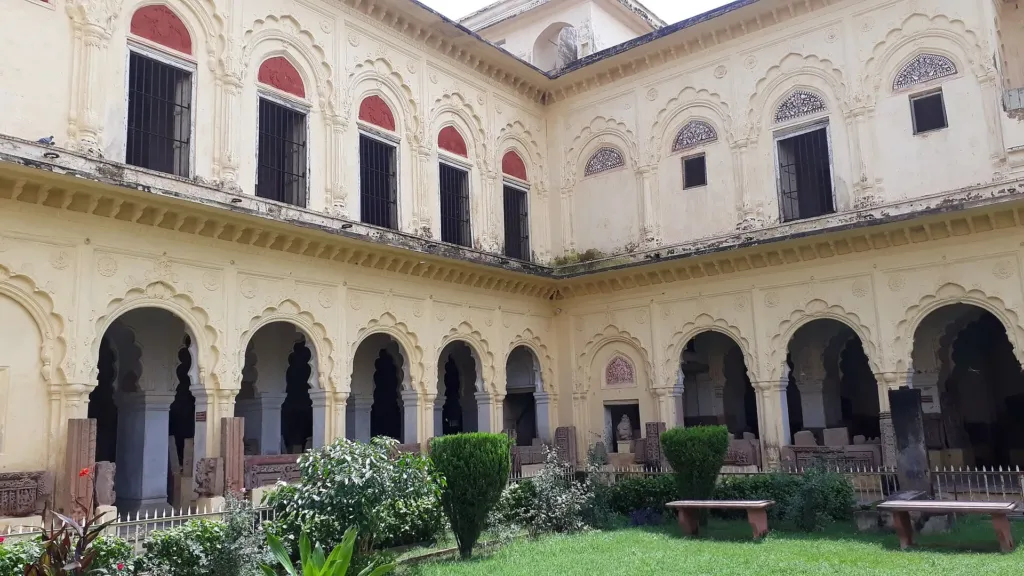
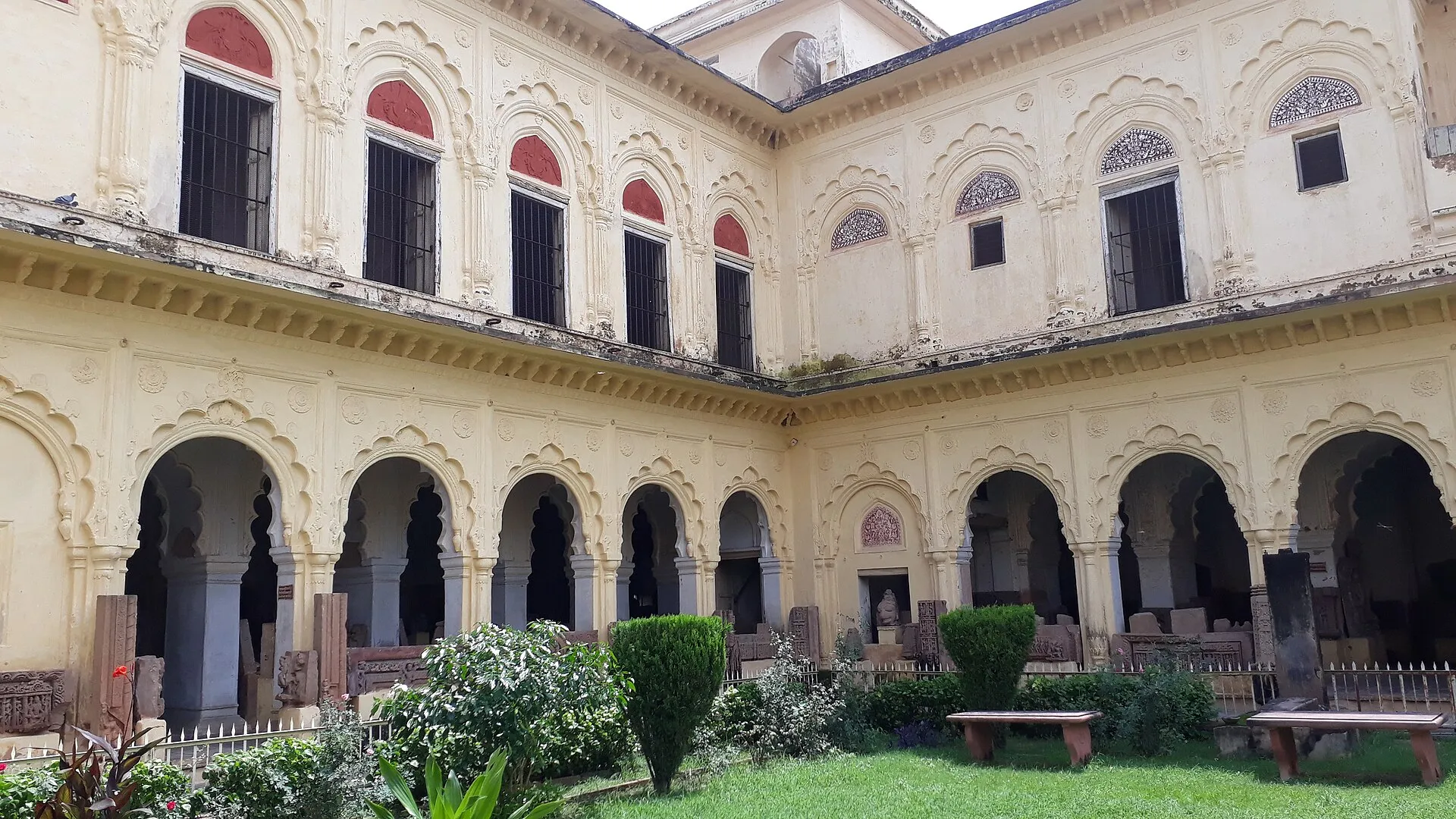
The palace is a flat-roofed, two-storeyed building arranged around a square courtyard. A small well and a fountain sit on opposite sides. Walk the full circuit of the ground floor first to get a sense of the plan before you climb up.
Halls, corridors and arches
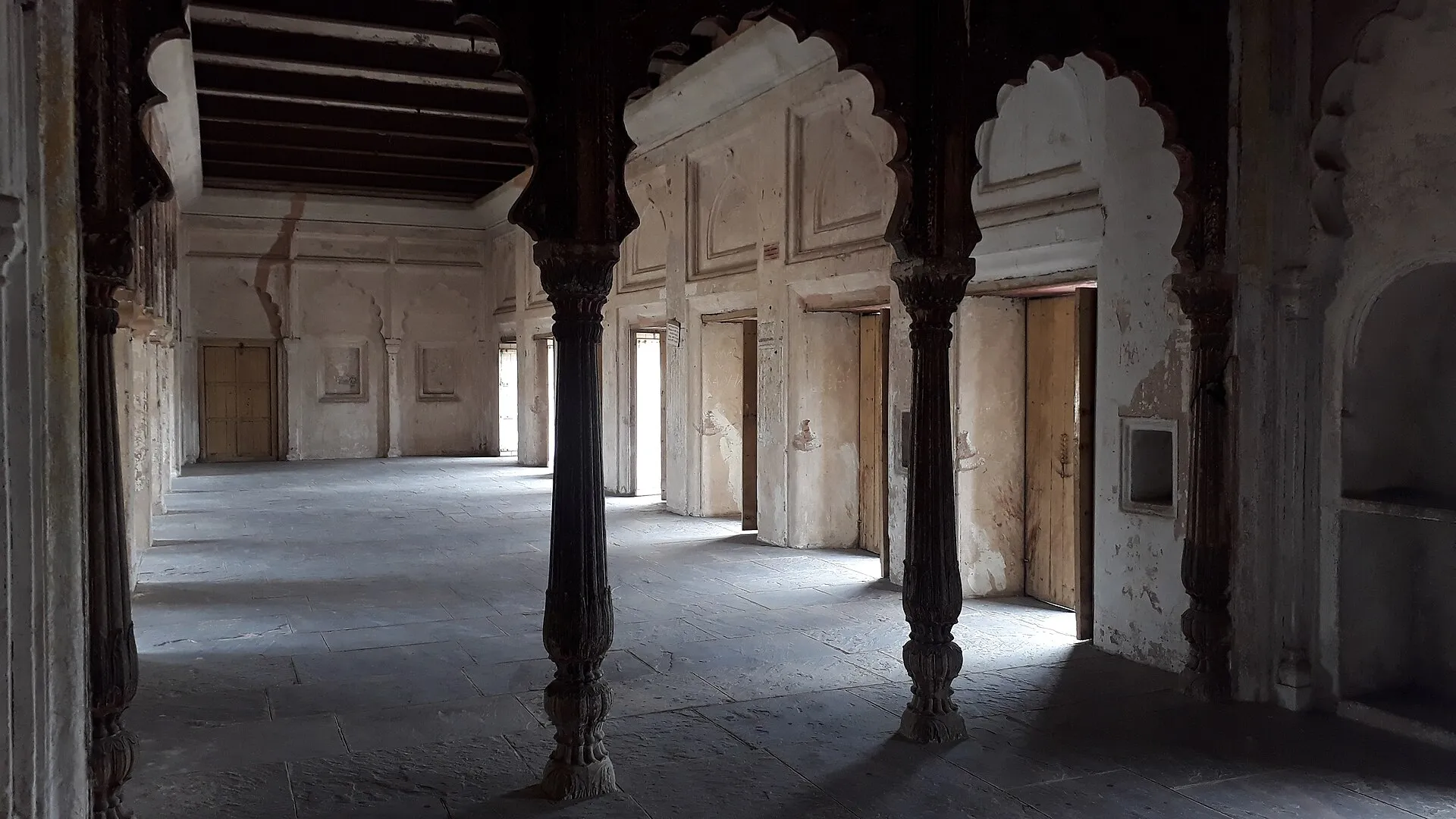
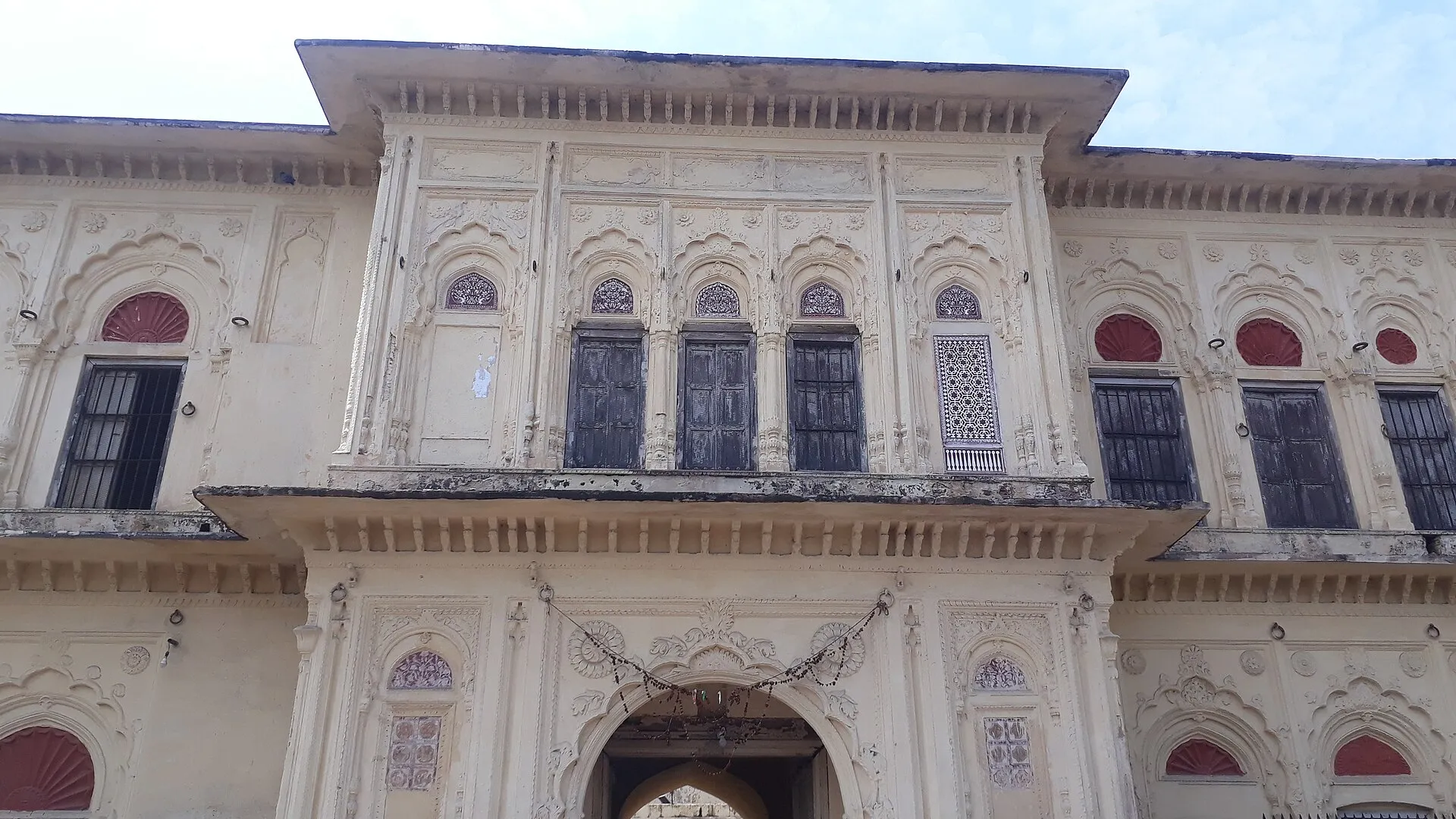
There are six halls, connected by parallel corridors with multi-foiled arches, and many small rooms opening off them. The architecture mixes Rajput and Mughal influences, with lattice work, carved brackets and balconies looking onto the courtyard.
The Darbar Hall
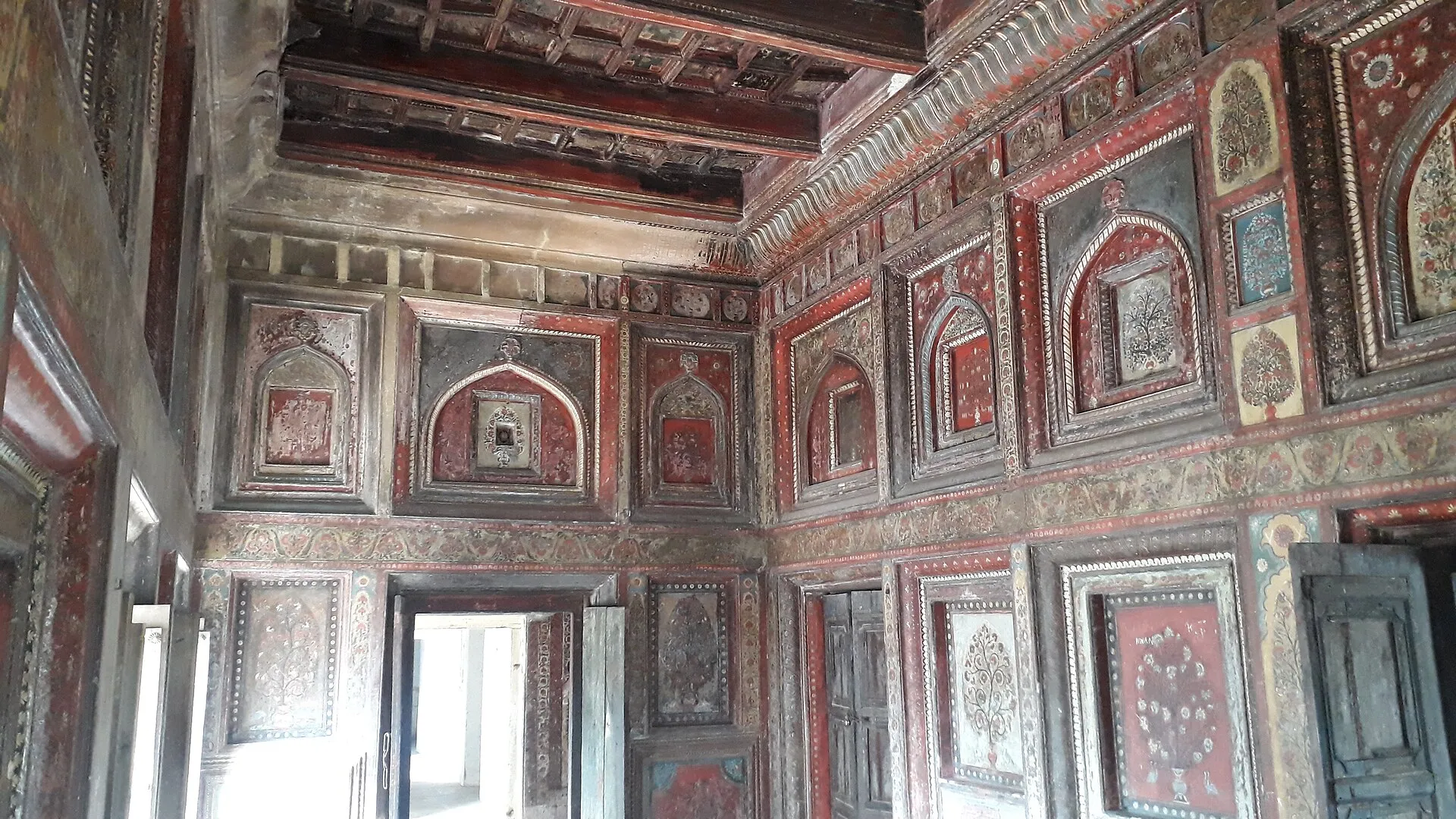
The highlight is the Darbar Hall on the first floor, reached by a flight of steps. This is where the Rani held court. Its walls and ceiling are covered in bright paintings of flowers, animals and geometric patterns, and the arches carry peacock and rosette designs. Give your eyes a minute to adjust and look closely: the detail rewards patience.
The sculpture collection
The palace also houses an archaeological collection. Stone sculptures gathered from sites around the region, including Madanpur, Barua Sagar, Dudhai and Chandpur, are displayed on the ground floor. They date from roughly the 9th to the 12th centuries, and they are a good introduction to the temple art of Bundelkhand before you visit sites such as Barua Sagar yourself.
What are Rani Mahal’s timings and entry fee?
The official Incredible India listing gives the opening hours as 9:30 am to 5:30 pm. Hours, weekly closures and ticket prices for protected monuments can change, so check the official site before you go. We could not confirm a current entry fee from an official source, so carry some cash and a UPI app in case tickets are sold at the gate.
- Time needed: 45 minutes to an hour for most visitors; longer if you enjoy sculpture or photography.
- Best time of day: morning, when the courtyard is cooler and the light is soft.
- Footwear: comfortable shoes for the stairs and uneven floors.
- Photography: follow the signs on site, as rules can differ for the galleries.
When is the best time of year to visit?
Jhansi has a semi-arid climate with sharp seasons. May is the hottest month, with an average daily maximum of about 42.5 °C, so summer visits are best kept to the early morning. July and August are the wettest months, each with around 250 mm of rain. The most comfortable period is winter: December and January have average highs of roughly 23 to 25 °C. Our guide to the best time to visit Jhansi goes through the year month by month.
How do you get to Rani Mahal?
Rani Mahal is in the old city, close to the foot of Jhansi Fort. Jhansi is a major railway junction on the Delhi to Chennai and Delhi to Mumbai lines, and the nearest airport listed by the official tourism site is at Gwalior. Once in the city, an auto-rickshaw or e-rickshaw is the easiest way in, because the old city lanes are narrow and parking is limited. Our guide on how to reach Jhansi by train, road and air has more detail.
What else can you see nearby?
- Jhansi Fort: the hilltop fort on Bangra hill, where you can see the Kadak Bijli cannon used in the uprising. Read our Jhansi Fort guide.
- Ganesh Temple: listed by the official tourism site among the attractions near Rani Mahal.
- Other places linked to the Rani: our post on Rani Lakshmibai’s Jhansi traces her story across the city.
- Jhansi Mahotsav: held each year around January and February, a good time to combine heritage visits with cultural programmes.
A simple half-day heritage plan
| Time | Plan |
|---|---|
| 8:30 am | Breakfast and leave for the old city |
| 9:30 am | Rani Mahal when it opens; Darbar Hall and sculptures |
| 10:45 am | Jhansi Fort; walk the ramparts and see the cannon |
| 12:30 pm | Ganesh Temple and a walk through the old market lanes |
| 1:30 pm | Lunch and rest through the hottest part of the day |
For a fuller plan including Orchha, see our two-day Jhansi itinerary.
Where to stay for a heritage visit to Jhansi
Hotel J P Farm is on Gwalior Road, in front of the Gwalior Road Police Chowki, near Polytechnic and below the Gwalior Road Over Bridge. We have 15 AC rooms in four types, from Deluxe Rooms at ₹2,300 for one person and ₹2,500 for two per night, to Family Rooms for three or four people, all before GST. There is an in-house multi-cuisine restaurant, free Wi-Fi and ample parking for those driving in. Check-in is at 12 noon and check-out at 11 am. You can see all room types and book online on our rooms page, or call or WhatsApp 9935677964 or 7525934333.
Frequently asked questions
Who built Rani Mahal in Jhansi?
Rani Mahal was built by Raghunath II of the Newalkar family, the subedar of Jhansi, between 1769 and 1796. It later became the residence of Rani Lakshmibai.
Did Rani Lakshmibai live in Rani Mahal?
Yes. After her husband’s death in 1853 and the annexation of Jhansi, she lived in this palace in the old city. She held court in its Darbar Hall and met her lawyer John Lang here in 1854.
What are the timings of Rani Mahal?
The official Incredible India listing gives 9:30 am to 5:30 pm. Hours and closures can change, so check the official site before you go.
What is there to see inside Rani Mahal?
A courtyard with a well and fountain, six halls with multi-foiled arches, the painted Darbar Hall on the first floor, and a collection of stone sculptures from around Bundelkhand dating from about the 9th to 12th centuries.
How long does a visit take?
Most visitors spend 45 minutes to an hour. Allow longer if you want to study the paintings and sculptures, and combine it with Jhansi Fort for a half-day outing.
Is Rani Mahal a protected monument?
Yes. “Rani Lakshmi Bai Mahal”, Jhansi, is listed among the Monuments of National Importance in the Archaeological Survey of India’s Lucknow circle.
Was Rani Mahal damaged in 1857?
A large part of it was damaged by British bombardment during the siege of Jhansi in March and April 1858. What survives includes the courtyard, halls and the painted Darbar Hall.
Sources: Rani Mahal, Wikipedia; Palace of Rani Lakshmi Bai, District Jhansi; Rani Jhansi Mahal, Incredible India; Rani of Jhansi, Wikipedia; Jhansi, Wikipedia; Monuments of National Importance in Lucknow circle, Wikipedia.
We run 15 rooms, 2 banquet halls, 2 garden lawns and a restaurant on Gwalior Road, Jhansi, and host weddings and parties every season. These guides come from what our guests ask us most.
Keep reading
Jhansi Travel
Best Time to Visit Jhansi: Weather Month by Month


Jhansi Travel
Two Days in Jhansi: A Simple Itinerary
Jhansi Travel